
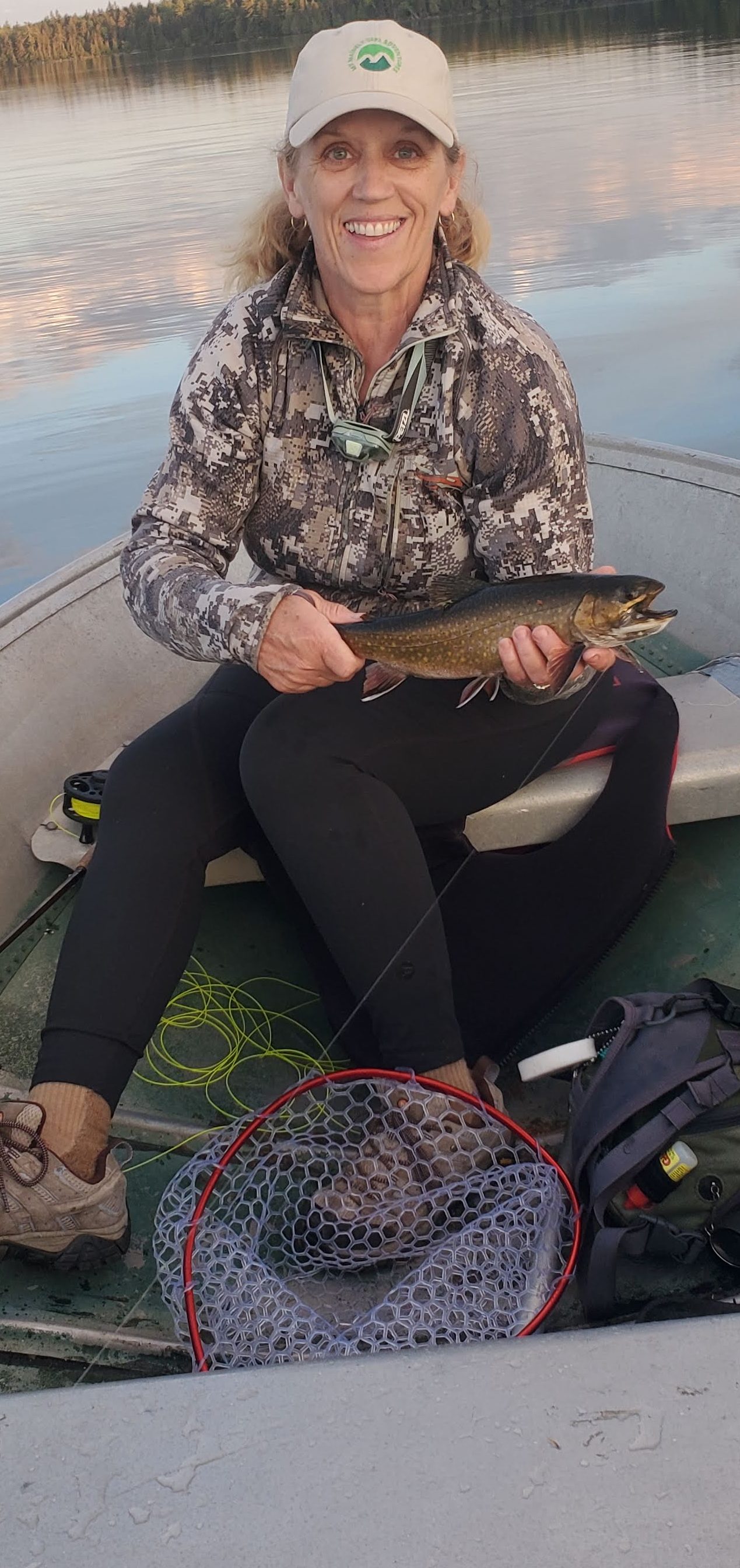
I’m no expert, but I love fly fishing for brook trout and salmon. When our favorite spot became artificial lures only, I decided to try fly fishing despite not knowing anything about it. The rods we used were long, heavy, and super flexed and casting was an all-out effort. We spent more time changing out flies than actually catching fish, so we got a lot of practice tying knots. In short, it was all trial and lots of errors, and once we had success it was all the sweeter. Being a novice can be challenging, so I’ve shared some tips to help you get started.
If you buy nothing else, buy a better beginner fly rod: a combo to take the guesswork out of buying and will prevent casting bad habits. My first better rod was an 8ft, 5-6 wt., 2-piece combo that now costs around $149; however, I recently found one major outdoor retailer has a similar one for $59. Ten years later, I still use my combo along with my 9ft, 6 wt., 4-piece ($169) combo. Major outdoor retailers have similar options within the same price range, so it’s not that hard to find a beginner outfit. I recommend buying an extra spool or matching reel for a sinking line if you plan to fish a river or do some trolling; most combos come with floating line.
I first used a traditional cloth vest, but now I use a small harness-style chest pack that can be bought for almost same amount as a cloth vest, and it has everything at my fingertips. These types of pack give you more freedom to move than the full-size vest packs, and are cooler to wear in the summer. Mine has a rod holder and all the tools are on zips. I am still guilty of cramming too much in it, but it makes changing a fly or tippet on the river easier.

If you plan to fish a river, or wade a shallow pond, buy a pair of waders that fit. Good waders are not cheap, but I quickly learned that sweating in a pair of men’s rubber waders with size 11 boots for my size 8 feet is no fun and fishing in freezing spring water with my sneakers doesn’t cut it either. If you can’t buy your “dream pair”, at least make sure they fit properly and that you can wear fleece pants and wool socks under them for the early season freezing waters. A good breathable pair of stocking foot waders with separate pair of boots is my preference.
The net may seem insignificant, but it’s hard to land a fish without a net. For years, I netted my catch with a $14 wooden net. The net was barely big enough for a decent salmon, and the fly hooks got tangled in the black netting. Thinking I finally found a better net, last year, I doled out a whopping $34 for an aluminum one with a rubber net. It hung low on my back, but was bigger than the wooden one. I think I used it twice before it disappeared, presumably down the river last fall. I’m back to using one of the wooden nets I kept as backup. For my birthday, I scored a larger oval-shaped rubber net from LLBean.

Understanding the hatch cycle will help you determine what flies to use and when to use them. While everyone has an opinion, here’s what I have had the most success using. Early spring on the river, use streamers or nymph setup using sinking line. Woolly Buggers (size 8 olive or black) with a tan, beadhead Hare’s Ear Flashback nymph (size 10 or 12) tied 18 inches down, or using a Black Ghost, will yield ice-out salmon. Early season, we troll for native brook trout on the pond using sinking line and one of the following: Black Ghost, Grey Ghost, Mickey Finn, or Maple Syrup (red or white). Save the floating line and dry flies for May trout fishing. My favorites are (size 10 or 12) Mosquito, Black Gnat, Blue Wing Olive, Elk Hair Caddis and Adams. I recommend buying a dozen nymphs and six each of the others to start the season off. It’ll be hard, but try to avoid the lure of filling your box with flies you won’t need. Don’t forget extra tippet and leader, and practice, practice, practice:

“Hello, It’s for You” casting! Remember, any fly fisherman at some point was a beginner. Wherever you fish, be safe, know the laws, and have a great season!

 Almost two weeks ago, I was out in the woods getting my mind clear, looking for antlers and trudging through some pretty deep snow when my foot fell deep through a snow covered brush pile. I fell flat on my face; my .22 barrel drove into the ground, and I got this incredible burning pain in my left knee. My foot had become lodged so that when I fell, there was no give, and the knee took the brunt of the fall. After a few curse words I got up and walked out, but the knee was incredibly stiff and sore. By the next day, I could barely walk on it and I feared the worst. What I don’t need is a torn ACL since I’m already the candidate for a knee replacement and with fishing season beginning in about a month, the last thing I want to do is be sidelined when I should be casting my fly rod. A trip to the doctor and I was told no torn ligament, just a good knee sprain that needs rest.

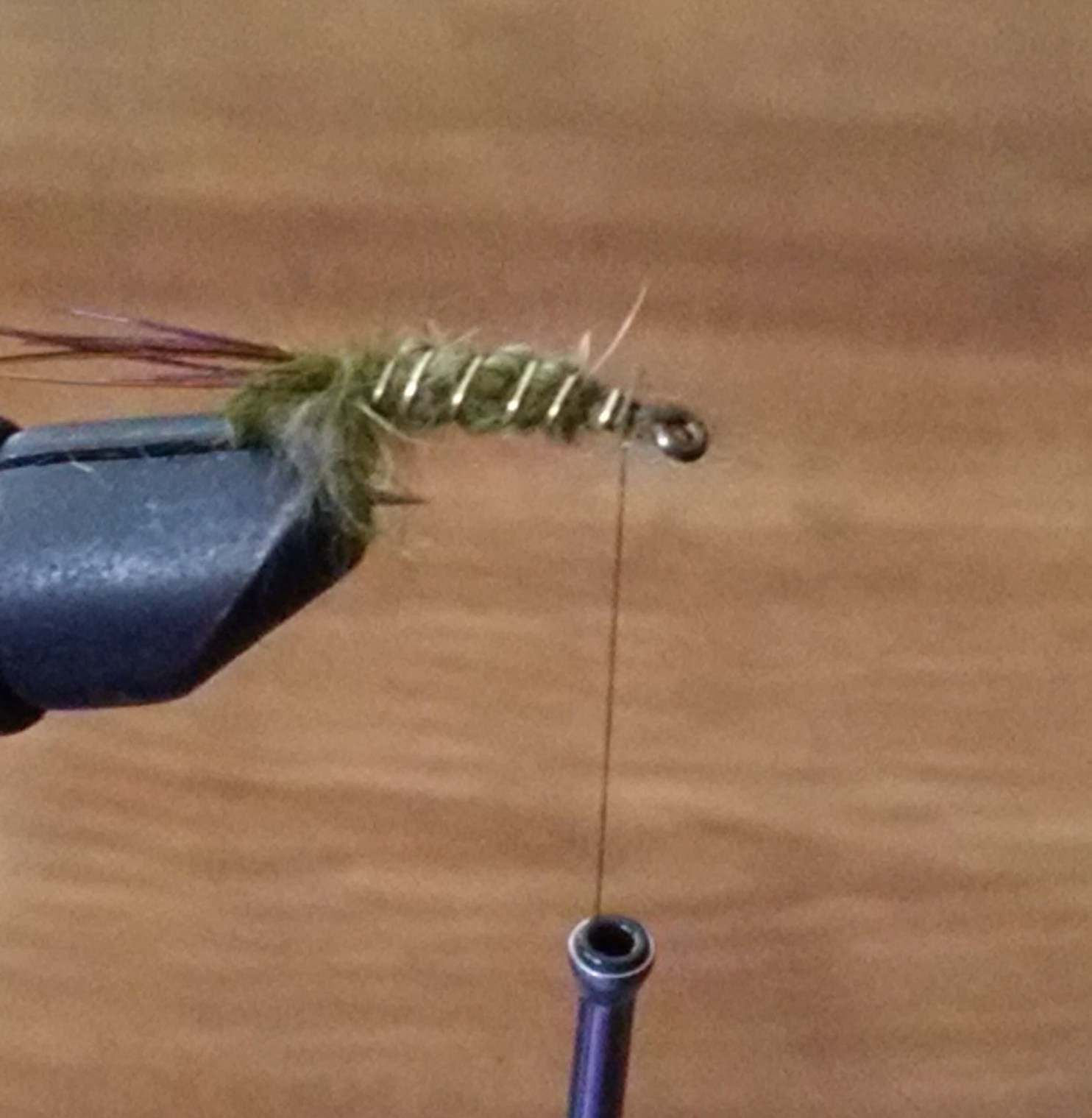
 These were hot last year and since there were no bugs, these nymphs were the only thing catching salmon. Dubbing sounds harmless enough, but it’s a nightmare to work with. Dubbing is dyed rabbit fur. It’s used to make the bump on the nymph…How much, how thin, too thin, too thick..gahhh! It seems like the harder I tried to make it look clean, the worse it looked.


 My Mainely Girl Adventures