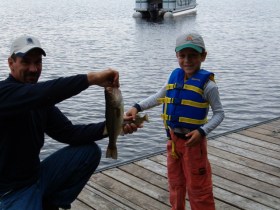
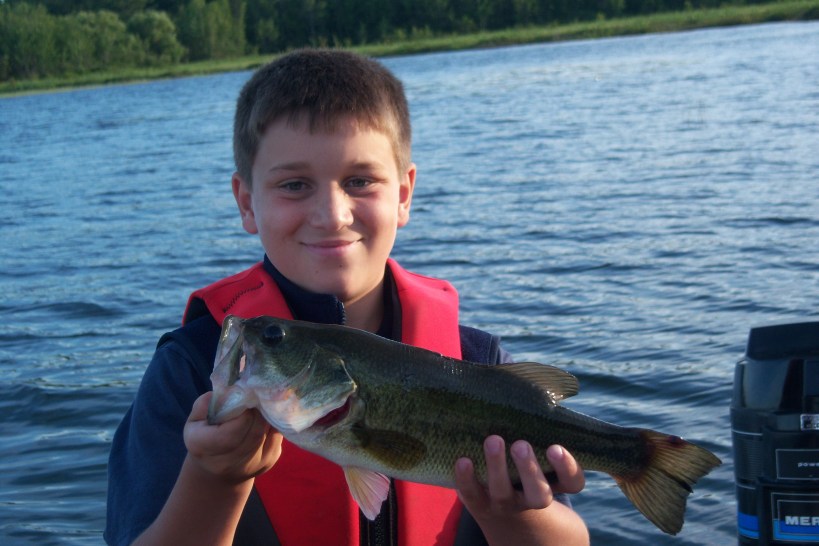
Bear Baiting Season Begins!

I swear, every year I get more and more excited about bear hunting.

Bear baiting begins one month before we actually get to hunt. I swear, every year I get more and more excited about bear hunting. I haven’t been able to actually get a bear, but none the less, I enjoy every minute of the process, and the experience in the stand waiting for a big boar to show up.

IMG_20150911_170357868
Last year’s bear site

This year, we moved our bait sites and eliminated one of them. It was too stressful to decide where to sit when all three sites were getting hit, and it seemed like the third bait only made the bear come less to the sites we wanted them at. With increasingly more human traffic on the mountain, we decided we needed to head deeper into the woods. I had only had my other bait site for two seasons, but moving it in deeper will mean a better chance of seeing bear during daylight hours. This year’s bait sits on top of a mountain in a beech tree growth. Claw marks from where they’ve climbed on the trees are everywhere, so I’m extra excited. I’ve already had moose and deer using my trail so I look forward to a wildlife filled hunt.


Black bears are naturally nocturnal, so to get a bear to come out during the daytime, it has to be very comfortable with its surroundings. In order to eliminate the interruptions we usually create by baiting during the week in the late afternoon, we’ve left enough bait in the barrel so that whomever decides to visit, will have some bait to come back to, and we’re only checking baits on Saturday mornings for now. That may change if the bears don’t come around. I also have an ace up my sleeve if the season drags on and no bear come during daylight hours…but I’ll keep that to myself for now.

IMG_20160730_160157197
This year’s site all baited.

My new site is a good quarter-mile into the woods, so we use the four-wheeler to bring in the bait. This year, we bought one barrel of bait to supplement what we had left from last year, but for now it’s lots of yummy cinnamon, frosted danish and muffins from last year. Along with sticky marshmallow nougat, and grease in smaller pails, the bait is left in a big blue barrel. We also put out a wick of anise oil that smells like strong black licorice for those of you who have never smelled it. Bears have incredible sense of smell so the scent acts as an attractant to get them coming to the bait site, and the bait hopefully keeps them coming back. Hopefully, but no guarantees.


IMG_20160730_160150045_HDR
My secret weapon for 2016


Speaking of sense of smell; last year, I worried I was too open and that my scent let the bear know when I was there. The wind was constantly changing. So this year, at the 2016 Sportsman’s Show in Augusta, I found and bought the hanging tree blind I had regretted not buying the year before. This blind will provide me with extra scent protection, and now the bear won’t be able to tell if I’m in the tree or not since I won’t be seen in the blind, and I won’t be rained on! My tree stand is situated so that my back is to sun, so in theory, the bear will squint from the sun if it looks my way. A strategic move on my part, I hope!


Let’s hope I don’t have the sow and three cubs like last year.  As much as I enjoy seeing cubs and a sow, I don’t want to meet them in the woods, and I would never shoot any of them. I really am hoping my big old boar, Scrapper, comes around… or another big boar would do too.

I_00490b
Last year’s sow and cubs making their rounds to all of our bait sites.
I_00060
Scrapper my night bear.


I’ll be keeping you up-to-date with happenings on the bait site and as I hunt. I hope I have exciting stories to write about…and eventually bear meat in the stew pot! Wish me luck!

In Pursuit of Striper

101_7563Fishing on the Maine coast for striped bass, which most fisherman call Striper, is one of my favorite types of fishing. We have tried fishing for striped bass with eels, worms, poppers, mackerel and crabs. Nothing has worked as well as quahog clams. The bigger the clam the better. The weight of the clam eliminates the need for a sinker.

HPIM0634aQuahog clams are big clams that we pick from the sand at low tide. This is perfect since we fish right when the tide turns and comes in. Well, we don’t actually pick them unless we buy them at the grocery store, but we prefer to get our own. quahogWe go out waist deep into the cold ocean water. We use our feet to feel the sandy bottom underwater while trying to stand in one place with the waves coming in. Standing with both feet together, John does the jig…a twisting motion to work his feet into the sand and feel a clam under his feet. I can’t use both feet together because the movement hurts my knees, so I use only one foot and move it back and forth moving the sand and digging a hole with my foot until I feel a clam. We  then use our toes to get underneath the clam and free it from the sand. Then comes the torture of getting the upper body wet. I do the big dip underwater to retrieve my clam. Into the suit it goes, and then I move onto another spot. We stock up on clams to use for future fishing as well as for the moment.

Picture_12
Tyler with his ocean pole at sunset.

Once we have enough clams, we grab our ocean rods. These rods are heavy duty with open faced reels. On the end of the heavy line is a big swivel and very large circle hook size 00.

Using a clam knife, we open the live clam and free it from its shell. If you freeze the clams for later use, they open just like they do when cooked. You can literally pull the clam apart without a knife. I like to make sure I cut the clam so that I get all of the big muscles that close the shell for added stability on the hook. Carefully, we weave the clam onto the hook so that the foot of the clam is threaded last. The idea is to get the clam onto the hook so that it won’t be cast off when you make the cast. There’s nothing worse than watching a big old clam fly through the air and not attached to your line!

HPIM0621
Out on the rocks at low tide. (c)SWarren

Fishing at low tide allows us to get out far on the rocks so that we’re not getting tangled in the weeds. However, you have to keep an eye on the tide. On several occasions we’ve had to practically swim back to the main land because of the tide coming in. I prefer to fish on the rock ledge on a peninsula over surf fishing. I want to have the rod in my hand when the fish bites.


Casting out into the water, the clam is allowed to sink slowly and then a slow reel in. Sometimes there’s a bite before the swallow, and other times, it’s simply one big swallow and a striper is on the line. If you’ve ever caught a large-mouth bass, then you’d love striper fishing. Striper fishing is one of the most exciting fishing I’ve ever done.With minimum lengths of 28 inches, fish get big quick.

Dad & Becky
Nothing better than the walk of success.

Occasionally we fish for striper and catch something else. On our first outing this year, I had bites and nibbles tugging away at my bait. Every time I tried to set the hook, I got nothing. Finally, after losing my clam and putting another one on, I had another bite. With my polarized glasses on, I was able to see a school of fish grabbing at my big clam. These were not striper. With a quick switch to a mackerel jig with a tad of clam, we were catching pollack!


Not nearly as exciting as striper, but lots of fun to see the youngest excited to catch something.

IMG_20160801_211213
Pollack for supper!

We’re hoping to get back out on the rocks for another chance to get a big one. If you fish for striper, give quahogs a try. And remember to bring along some smaller hooks for those fish that show up when you least expect it. Someday I’ll learn how to fly fish for them stripers…always a new adventure waiting to happen.


PS: Remember to wear a life jacket if you go out in a canoe or kayak, especially on the ocean..


Being the Image of a Woman Hunter

Hunting has empowered me to do things I never imagined I could do, and that’s the image I want every woman and girl to identify with.

101_7672
My buck (c) S. Warren

Life is full of ups and downs. I recently got turned down to be a team member of an organization for women who hunt. I realized after I applied that I probably wouldn’t be chosen, not because I wasn’t qualified, but because I didn’t fit “the image”they were seeking. Just looking at their website, I knew I didn’t fit. I felt like I was back in high school waiting for approval from the popular girls.

It’s kind of funny since I’ve never been a clique sort of girl. In fact, as a young girl, I avoided them.  I never hung with the “in” crowd in high school and pretty much kept to myself. It was much easier to do my own thing than face any type of rejection because I didn’t measure up in some way to standards set by someone else.

Those standards of beauty and perfection haunted me all my teen years, but over the years I’ve learned to be comfortable with who I am, but I will admit I still have my insecurities that try to whisper in my ear from time to time. I pride myself on the fact that I’m not like everyone else, and I think that’s one of the reasons hunting and fishing is so attractive to me. I can be me, and I can be good at what I do…and it doesn’t get any better than that.20160604_095711-1

In a time when women and girls are the fastest growing demographic and are becoming the “new face” of hunting, I’ve also discovered that the hunting industry as a whole is guilty of setting the same type standards for women and girl hunters that we see in fashion magazines where our worth is our youth and beauty. We aren’t seeing the real images of  women hunters as a whole, but a merely a slice of the pie. Most notably, we aren’t seeing women hunters over the age of 35. It’s as if they don’t exist, unless you know where to look for them.  After some help from friends, I found a few for inspiration: Michelle Bodenheimer, Barbara Baird, Mia Anstine, and Kirstie Pike. There are plenty of women who were hunting and fishing long before Eva Shockey arrived, and for all you know, they could very well be your neighbor, your co-worker, or your banker.

images
Still has on mascara and is young woman. photo by RealTree

With media constantly setting the standards of beauty and bombarding girls and women on a constant basis to be perfect, one of the main themes women hunters should be emphasizing is to encourage women and girls to become empowered and stand up to these pressures. On one hand we’re telling girls it’s cool they don’t wear bows, but instead shoot them, while on another hand, we’re subliminally telling them that they should look like a model. I don’t want these persistent images to dissuade women and girls from hunting because they won’t fit “the image” portrayed in magazines, television, online, or by a group.

I like to think that I represent women who hunt–real women, or at least older women. I am no Eva Shockey. I’m not twenty-something years old with a skinny body and long flowing hair. I am 52 years old, fighting the battle of the bulge, and I don’t wear makeup when I hunt…ever. BUT I can hunt and fish. I’m an avid hunter and fisherman, not a professional. This means, I don’t always get a deer, and most often not a trophy deer. My fish are average, not trophies. And I know there are many, many more women out there just like me. They’re just out in the woods and water doing their thing.

20160206_133057

Hunting has empowered me to do things I never imagined I could do, and that’s the image I want every woman and girl to identify with. I want women of all ages to step out of their comfort zones and be recognized for their skills, and not be judged on beauty standards set by others. This hunting and fishing thing isn’t for just a select group of women.

If you have the desire to learn to fish or hunt, then it’s time to put aside any insecurities and just do your thing.

Whether you’re ten or thirty or fifty years old, you’re never too old to start. You don’t have to be perfect, you just have to be passionate and want it.

If you need camaraderie, then find women who are like you by taking a hunting safety class, joining a local sportsman’s club, or using social media (that’s how I’ve found a lot of my new friends).  Don’t forget to ask sisters, daughters, nieces and friends to join you. Finding others with the same interests will help you build the confidence to do your thing.

Meanwhile, I’ll be out doing my thing and not stressing about whether or not I fit in.
I hope you’ll join me.

TBT-My First Moose Hunt – Final

I Get My Moose!

We had found our way to the Sheepscot Wellspring Land Alliance, now called the Midcoast Conservancy. I called to let them know I was hunting there, which was a request in the brochure.

I took a Friday off so we could hunt two days this week. I was able to find, using the map, that we could access the bog through various trails. This would cut down on the mountain climbing and possibly may save us some time so there would be less time walking, more time hunting.

Friday: One way to enter was by using the gas pipeline access. Our trusty Gazeteer came in handy to find the trails we needed. We planned to use our four wheeler to drive the trail once we found access. We met some really nice people who offered us park in their yard so we’d have access to the pipeline trail. We used our GPS in walk mode to mark where we parked the ATV and to find our way out. While the walking was easier, the distance was longer. We hiked through trails for miles.

map


On our way in, I seemed to be watching more where I stepped than in front of me since all I could see was John’s back. Our first encounter with wildlife was as we were approaching the softwood area. There we jumped the biggest, grayest buck we had ever seen. I only got a glimpse of his hind end, and neither of us could get a shot. That deer was on a gallop too far away for any chance. We eventually found our way back to the beaver bog. The day ended pretty quiet. We made our way back to the four wheeler and left that day exhausted.

Saturday arrived with aching legs, but a sense that we were getting the feel for the land and thinking that perhaps we’d see a moose. A breakfast of coffee and Tylenol and I was ready.

This time we used yet another trail to get to our main access point (8). The hike up the side hill was pretty challenging without having sore legs from the day before. Almost to our access spot, John abruptly stopped. He’s whispering…deer, deer, deer. I don’t see a deer. When I finally saw it, it was a high racked six point buck that was just staring at us about 60 yards away. John wanted me to use his shoulder as support to make the shot. I became flustered because I didn’t want to blow his ears out, and about that time, the deer took off. I tried to make the shot as it ran, and I missed. So we went back to moose hunting.

I had discovered on the map that we could cross the Sheepscot River (which is really like a wide brook) further up from the beaver dam that we had been crossing by jumping from boulder to boulder. This way we didn’t have to deal with the wet zone, beaver dam or get wet crossing the water. By crossing the river higher, it also put us in the ideal spot for moose.

Around 1 pm we walked into the thickest wall of pine and fir I had ever been in. I would have easily gotten lost had John not been leading the way. Everything looked the same until we came into a clearing. There, in front of us, was fresh moose droppings and browsed fir tips. We found their hideout. As we walked, I spotted the moose, two moose-one bull and one cow. I stopped and pointed and told John, and said, “There they are.” He asked if I wanted to use his gun. No, I said. I drew my gun to shoot. I had the bull in my sights. Then I began to overthink. The moose were quietly bedded down in a willow growth. Willows blocked me from getting a clean shot. Do I shoot? In the time I took to question myself, which was only a matter of seconds, the moose realized we were standing there, jumped up and bolted. Mr. Bull was gone in a flash crashing off through the woods, but the cow made a much smaller circle and ran directly broadside toward us over a knoll. We each shot at the same time and the cow was down. It was now 2 pm. It would be dark in about two hours.

This slideshow requires JavaScript.

Now the real work began. There was no way we could get the moose out of this area because four-wheelers aren’t permitted on the trails, so we had to pack it out. John began field dressing the moose as I made a trip out of the woods and back to the truck to bring the guns out, call my son for help to pack out the moose, and call the game warden to find out if I really was required to bring out a reproductive part of the moose since I was allowed to shoot either a bull or cow. Yes, was the answer…seriously. So off came the teats since I had no idea where to retrieve an ovary.

I took on the task of lugging out the tenderloin in my back pack. It weighed so much and I was so tired from all the walking that it didn’t take much before I was flat on my face. I caught my pant leg on a stick and down I went. I literally had to walk leaning forward to offset the weight so I could climb the hill. My second trip out was made in the dark by flashlight. The guys used backpack frames to lug out the front and hind quarters that they had packed in meat bags. They too had to make two trips.
We loaded up the truck, feeling exhausted but excited at the same time that we were able to harvest a moose for our family. We tagged the moose at the now closed station where I also tagged my first turkey.

102_6144

My moose hunt was far more physically challenging than I ever imagined. I didn’t know what the outcome would be, but I’m glad we didn’t give up. It wasn’t the perfect hunt, but it wasn’t the worst. I had missed a nice deer, but if I had gotten that deer, I wouldn’t have had time to hunt for moose, so I guess I’m glad I missed it…sorta…We ended up getting one of only two moose harvested out of the permits allotted in zone 23, and for that, I am extra proud. Best of all, my family got to eat some amazing meat for the next year.

102_6128

I will always regret my hesitation, and wish that I could have gotten the bull moose that had a beautiful rack on it; however, I feel I am the luckiest girl to be able say I have a chance to do it all over again only this time with much better odds.

Wish me luck in September!

TBT-My First Moose Hunt-Wk 2

I kept saying over and over in in my mind: Don’t give up! when all I wanted to do was sit down.

We Climb Down a Mountain

beaver dam
Beaver dam photo by SWLA.org

By mid-morning we were a bit discouraged. We stopped into the local store for coffee and snacks and ran into an old friend of John’s dad. After some conversation, we told him we were moose hunting. The gentleman knew “exactly where to go to get a moose” and told us where we needed to look. He and his grandson hunt this area for deer, and they often see moose. We were excited again. We thanked him and headed out for what we thought was a climb down a small hill to a bog.

It had recently snowed but then half melted away, which made walking more difficult. The temps had warmed, but it still wasn’t overly warm…unless you’re hiking a few miles. We parked the truck and headed out to scout for moose. There was a small trail at the top of the mountain, but we cut off from the trail and headed straight down over the mountain. We managed to jump two nice doe on our way down. This “small hill” ended up being a monstrosity. It was about a mile and a half downhill before we ever came to the bottom of the hill. There we hit another walking trail but continued straight on through in hopes we’d reach the bog.

Walking downhill was awkward for my ailing knees. On top of that, I was completely over dressed. I had on my big L.L. Bean boots with wool socks, my green Johnson woolen overalls, heat gear turtleneck, hunting jacket and orange hunting vest…and I was carrying my rifle. I was drenched with sweat before we got to the bottom of the mountain.

Beaver dam2
Beaver dam photo by SWLAmaine.org

We crossed a small stream, then a few hundred yards later, we hit a flooded area and then a beaver dam. I prayed the water wouldn’t go over the top of my boots. We managed to get to the beaver dam. We then shuffled our way across the edge of the dam, holding onto the tips of branches. Somehow we managed not to fall in. Once on the other side, we heard some crashing and immediately noticed we had jumped two moose.


moose2
Young moose photo by SWLAmaine.org

I was in a dilemma. I had made it clear that I would absolutely not shoot a moose with a calf no matter how old. This appeared to be a cow and calf, or two cows; we weren’t sure. We decided we might be lucky enough to spot a bull so we decided to track them. We tracked through the bog, twisting, winding, slopping our way through a maze of woods and moss from which I didn’t think we’d ever find our way out. We tracked the moose for almost three hours. Good thing John has “iron boogers” to get us out. We never caught up the the two moose, and as dark closed in on us, we finally gave up and headed back.

By the time we got back to the beaver dam, I was exhausted. I was thirsty beyond thirsty. We hadn’t brought one ounce of water with us. Our short trip turned out to be the whole afternoon. I shimmied my way across the beaver dam and through the wet land. As we came upon the bottom trail we had initially seen, I spotted a brook with crystal clear cold water. Against protests from John, I laid down and took a good healthy swig of spring water. I didn’t know where we were and at the time, I didn’t care. It wasn’t connected to the beaver dam and it tasted lovely. By this time John had thought I had gone insane. Perhaps I had. You probably shouldn’t do that.

SWLA
Sheepscot River tasty water                           photo by SWLA.org

I tried to convince John to take the unknown-destination path which looked much more an appealing walk than the mountain he wanted me to climb, but with darkness upon us, the last thing we wanted to do was be lost in the woods. So we hiked back up the mountain, the tall freaking steep mountain. As we began the hike up the mountain, I began peeling off my jacket and hat. I was so hot I could barely stand it. My feet hurt from sliding inside my big boots.  My knees really hurt. I was thirsty still. I was sweating. I ended up eating snow as I climbed the mountain. It was absolutely the suckiest moment of hunting I’ve ever experienced. I kept saying over and over in in my mind: Don’t give up! when all I wanted to do was sit down. Luckily my asthma didn’t make the climb worse, but none the less, I was bummed that I hadn’t better prepared for all the walking I had to do and for the physically intensive challenge I had faced.

We finally made it out of the woods by nightfall about half a mile from our truck. I declared I couldn’t take another step. As I sat on a stump feeling defeated and waiting for John to come pick me up with the truck, I found out where we were thanks to a sign and a nifty brochure. We were at the Sheepscot Wellspring Land Alliance (SWLA.org) now called the Midcoast Conservancy, and we had climbed Whitten Mountain. It turns out all those trails do lead to somewhere, and I was going to do some research for the next weekend of hunting. I was going to be more prepared. AND I was never going into the woods without water again.

Next week: I Get My Moose!


TBT: My First Moose Hunt-Wk 1

moose
photo by canoemaine.wordpress.com

In Maine, there is a moose hunt. It began back in 1980 and despite being challenged by anti-hunters, the hunt has continued and is probably the most highly sought after lottery drawn hunting permit in Maine.

As luck would have it, I scored a bull moose permit for northern Maine’s zone 5 in September for this year. Never in a million years would I have expected to get a permit since I had just gotten one in 2011. I am extremely grateful for my chance at a trophy moose that will not only feed my family but will be an exciting adventure with the entire family. This luck of the draw has me reminiscing the good and the bad about my 2011 moose hunt.

My husband, John has always applied for a permit in hopes of getting one in a northern zone overrun with moose. Admittedly, I originally applied to increase our chances; I wasn’t a hunter then. After 2002, not only did I apply each year, but with full intentions that I would be the shooter if I was ever drawn.

The lottery has been under a lot of scrutiny over the years. After getting too many complaints to ignore, the Inland Fisheries and Wildlife made some major changes to the system. One change in particular was that for each year you had put in, you not only had a bonus point, but also from then on, those with more bonus points would have better odds at being picked. They also lengthened the time span between being eligible for a permit from two to three years. With a level playing field and the hopes that we’d finally get picked, the idea of getting a moose permit seemed more in reach.

We both had applied so long that we fell into the “I’ll take anything if my choices weren’t available.” In reality, that really didn’t mean I wanted or expected to get a moose permit in November in the zone with one of the worst success rates in the entire state of Maine. When I applied for the lottery, my zone choices began with the obvious northern ones and worked their way down the map to my home zone with my last choice being the zone next to ours. But really how could I lose with all those choices listed first? A word of advice: if you really don’t want that zone or date, don’t write it down.

IMG_20160623_200713196
My 2011 Moose Permit. Note the date error!

In 2011, the day of the moose drawing, my phone started ringing off the hook. I got a moose permit! I was ecstatic with the news! John was my sub-permittee. I repeatedly teased him that I got a moose permit before him. I’d send him text. “I got a moose permit.” or I’d say, “Guess what?” and follow through with “I got a moose permit.” He was a great sport, and I just tried my best to make sure we were prepared to make it the best hunt we could.

It didn’t take long before anxiety soon set in when I realized it was a November hunt for a bull or cow in Zone 23. In a preparation of the season, I had to do my homework. Zone 23 had the least success rate of any zone. It was disappointing to not get a “good” zone but with only 20 permits, there would also be less competition. The good news is that Zone 23 is known for its deer herd, and I could shoot any moose. The bad news is that everyone would want their areas for their own deer hunting, and calling in a moose wasn’t really going to work in November. I had no idea what lay before us, but I knew it wasn’t going to be an easy task. no hunt sign

I even paid the fee and entered the official moose swap website. I couldn’t even get people who live in 23 who had a permit for my home zone of 16 to swap with me. It was a waste of money and soon reality set in. If I wanted to get a moose, we were going to have to work for it. We didn’t want to rely on a Maine guide. John has been my guide all along. We’ve self-guided all of our hunts, and we didn’t want it any other way.

We talked to everyone and anyone who would give us leads. We used our beloved Maine Gazeteer filled with detailed maps to find boggy areas and on several occasions, we spoke with landowners and biologists. We would follow every lead and a few times this led us to nothing but waste time because there were so many deer hunters that it felt impossible that’s we’d see a moose.

We finally got permission to hunt on a farm that had been gated in Albion. The only person who had a key to the gate was the friend of the landowner, so we’d have to track down this guy down to make sure we could have access. The first day he was sitting on a wood pile, smoking a cigarette and had a rifle across his lap. He was deer hunting…I guess….He was all good to our face, then promptly tried to shut us out the next day. We went back to the landowner and asked him to call the guy…he did. We were all set. We showed up the following day and the gate was open, so we drove in. We hunted the entire day hiking over hills, brooks and clearcuts. On the way out, we found our selves locked IN.  Luckily, John knew the road came out into another field so after four-wheeling our pickup through some pretty tough terrain, we made it out. Despite having landowner permission and lots of moose signs, we didn’t go back. This moose hunt wasn’t supposed to be about hassles with landowners’ buddies.

Next: Week 2: We Climb Down a Mountain


For the Love of a Bass Fishing Son

I’m am the first person to admit that I enjoy fishing, but fly fishing is my true love when it comes to fishing. Other than white perch fishing, we really spend all of our time fly fishing. So when the youngest son, Tyler, started bass fishing this year, I was a bit baffled. We had invested a considerable amount of money in all this gear for him to go fly fishing with us, and now all of a sudden he’s bass fishing. What gives?! We don’t even eat bass!

product-the-original-spinnerbait-fishing-lures
Spinner bait photo by http://rumbadoll.com/

As this school year came to end, it also was the end of high school for all of us. Tyler was graduating and then starting his summer job the following Monday. In the spirit of making this his time, we planned a full weekend of bass fishing on the lake in the boat. I have to admit I didn’t have a huge amount of enthusiasm for bass fishing, but this wasn’t my weekend, it was Tyler’s.

Sure, we had caught bass before with the spinner bait I kept in the tackle box, but I was out to catch anything, not targeting bass. And most of the time, I was using crawlers, not bass lures. I still remember the fight to get this one into the boat and from the smile on my face, I had fun catching him. I released him since we don’t eat bass.

Staci's bass
One of the few small mouth bass I have caught. I was fishing for perch with a worm! (c) S. Warren


100_0678
Big brother Zack, youngest Ty, and future son-in-law Aaron showing off their ice fishing catch. (c) S. Warren

As I recall, fishing on East Pond was pretty fun. Among the white perch, sunfish and pickerel, we caught several bass each summer, and my oldest son was great at pulling large mouth bass through the ice on East Pond each winter. To me, East Pond with connects to Serpentine Stream where I learned to fish, was more known for the white perch run–a kid’s fishing paradise. In 2013, the lake changed. The biologists removed a lot of fish because of the need to control algae blooms and this also seemed to affect the bass population.

Picture 084
Dad and Ty with his first large mouth bass on Messalonskee Lake, Sidney, ME.

Now looking back, I realize Tyler fell in love with bass fishing long before he ever put a fly rod in his hand. There is nothing like a good fight on a kid’s pole to get hooked. We stayed at a camp on Messalonskee Lake and the entire week was spent fishing on the dock for bass.

Now it’s all starting to make sense!

Summer 2009 More 024
One happy boy with a very nice large mouth bass. (c) S. Warren


Tyler has changed a lot over the years, and I guess his love of bass fishing has always been there. He’s pretty amazing with his casting moves. I, on the other hand, need to learn how to use my new Ugly Stik spinning rod. I couldn’t seem to get the bail down on my reel before the frog hit the water. I watched bass repeatedly slam my frog, but I couldn’t set the hook because I was just not fast enough. There’s actually a lot more method to bass fishing than I ever thought, and it’s a lot more fun than I remembered. I have a lot to learn about bass fishing from my son, and I’m looking forward to every chance I get. You’re never to old to go fishing with your kids, and eventually they’ll teach you a thing or two. Happy Fishing!

TBT: Brook Fishing to Fly Fishing 101

100_0810
Fishing for brook trout before access was an issue. (c) S. Warren

Before we got married, my husband John and I would fish for brook trout in Mount Vernon, Maine. It was one of the few places where a brook trout were more than six inches long and not many people fished the brook. At first I wasn’t a fan of brook fishing because my lines seemed to always get tangled in a bush. I spent as much time untangling my line from tree limbs as I did actually fishing. I ended buying short kiddie poles and they worked great for brook fishing. This is probably when I really learned how to fish and learned how to tell when a fish bites, and only then did I really started to enjoy fishing.

IMG_20160314_203116608
Showing off their catch to the kiddos. circa 1990

Eventually I graduated up to being able to fish at East Carry with my husband’s family. Fishing East Carry was special because it was the only place we could catch big brookies…or so we thought. Back then fishermen were allowed to keep 5 fish over 8 inches and could catch them using the “plug” fishing method, which is simply big night crawlers on a #4 hook, no bobber, and slow reeling in the line to attract the fish. And these fish ranged in size of 12-16 inches most of the time. We had so much fun and we usually caught our limit–obviously too much fun because now fishing on East Carry is restricted to artificial lures only, and only two fish can be kept. We’ve learned to limit ourselves as well. We release way more than we keep.

IMG_20160323_224202879
Our take home for everyone but not the entire amount caught. circa 1982 (c) S. Warren

Spring brook fishing in Mount Vernon became an annual outing with our kids until someone started blocking access. After a brief confrontation with a person who wasn’t the landowner but only someone who wanted the fishing and the access all for himself, my husband defied the man’s yelling and continued on his way. He was taking our youngest, who loved to fish and he wasn’t about to let this guy ruin it; however, it did ruin the fun and the son didn’t want to go there anymore.And that was the end of brook fishing there.

Spring 2009 014
Otter Pond at sunset. (c) S. Warren

That’s when we decided to take him to Otter Pond. Other than fishing East Carry, we never really fished for trout. Otter Pond is a tributary pond to East Carry Pond; it’s a small road accessible pond that has brook trout and it allows for worms. Perfect!

We had artificial lures too, and the boy was awesome using them, but I never caught anything except bottom or a tree limb with a treble hook lure, so I wasn’t all that excited to spend a whole weekend trying to catch fish with them. Then came the brilliant idea. We decided to teach ourselves how to fly fish so that we could once again fish East Carry Pond. Fly fishing was a new adventure for all of us. We would always see fish surfacing on the far side of Otter Pond, but never where we could get to without a canoe.So we loaded up the camper and the canoe, and set out to take the boy fishing for the weekend. We tried brook fishing along the way. We didn’t have a lot of luck but fishing made the boy happy and that’s all we hoped for.

All three of us in the canoe: John paddled from the back, I was in the front and Tyler was in the middle. We spent the weekend taking turns casting, perfecting the casting technique, tying on different flies, and learning the art of setting the hook. We caught fish after fish and release most of them. We saved enough to have one meal which we cooked over the campfire that night.

Yes, there were squabbles followed by awkward moments of silence.  “Mom went out of turn”, “the fish jumped by me…not you”, our lines became tangled, Dad didn’t say “casting” before he started casting, and the boy almost jumped out of the canoe when he saw a spider in the tackle bag…but all in all, it helped us learn how to work together, to communicate,  and to enjoy each others’ company, and for that, I’ll always cherish these memories.

Now we pretty much only fly fish unless we’re fishing for perch in Great Pond or striped bass on the coast. Fly fishing keeps the mind busy and there’s seldom boredom with fly fishing…and catching a fish on a fly is so exciting. When it’s too windy to fish the pond, we head to the river. It makes wading the river currents and casting and interpreting the waters all the more satisfying.

478300_3381915460260_1432194090_o
On the far side of East Carry by the Appalachian hut.

For almost six years, the three of us have fly fished out of the canoe and explored the pond. The youngest now 18 years old, isn’t as excited to go because we marathon fish, but we’re hoping we can coax him to join us a few times before he starts his summer job. As much as we’d like him to join us, we’ve learned to go without him, and enjoy sunsets and fish rises on East Carry. We don’t do much brook fishing anymore…but if you get the chance, it’s another great way to get yourself or a kid outdoors.

IMG_20150711_200025970_HDR

Sunset on East Carry and fly fishing the hatch. ❤


Spring Mud Makes Maple Syrup

Spring is a season that I can’t wait to be over. March brings on mud season. I hate mud. I don’t want to walk in it, drive in it or have it in my house. It’s usually too gross to be in the woods once the snow is gone, but until the snow goes, it’s prime maple sapping time.

John started making maple syrup a few years ago to spend time with our oldest son. This soon became a time spent with the youngest son (pictured above). Now it’s my turn. This is the first year that I’ve helped put taps in the trees and checked on the sap buckets, and helped with the boiling process. I’m learning a lot even though I’ve been a spectator for many years. We don’t have a lot of fancy equipment or complicated setups; just some pails, tree taps and nails to hang the bucket.

Before the season even began, John found a couple dead maples to cut, split and stack by the fire pit. The fully dry wood makes for a really hot fire. The fire has to be constantly tended so that it stays hot, and the boiling sap watched so that it doesn’t burn.

Maple syrup season begins when it’s freezing at night and warm during the day. The sap will run until there’s no longer a swing in temps from night and day. We’ve only had our taps out for a week and a half, but the first day we got six gallons of sap. Then came a couple fully cold days followed by rain so no sap flowed. Today Maine broke a record and hit 65 degrees. And the sap flowed again.  After collecting sap, John had it the lobster pots and boiling before I even drove in the driveway from work.

In no time, he had boiled down all the sap we had collected today and added it to the sap he had boiled down on Sunday. Once it reaches a small enough amount and is gold honey colored, we bring it inside and finish the boil down process on the stove. Once the syrup reaches a full rolling boil and closes in the center, the syrup is ready to be poured through a filter into a jar.

This part is tricky so not to overfill the filter and not burn yourself. I held the filter and watched for over pour as John poured syrup. We had to alternate the filters because they get plugged with sugar sand or the syrup cools so that it flows slower through the filter. We ended up with a full quart of syrup. This will be great to enjoy at breakfast on Easter and Christmas, hopefully in the company of our kids.

I have a feeling our sap season won’t be long this year. That’s okay, because I just started getting my water alerts for the river levels on the Dead River…and that means fly fishing season will be here soon…hopefully sooner if they ever drop the river. In the meantime, I’ll tolerate the mud with some fly tying, and I’ll enjoy my chaga tea with a little bit of maple syrup. Yum!

IMG_20160309_200640010