
Now is the time to start searching!
Every year, at the beginning of the fiddlehead season, I see countless people asking, “Is this a fiddlehead?” It seems like a no brainer finding them, but I forget that when I was growing up, my mother would have done anything to know how to find fiddleheads and not have to buy them. Since fiddlehead spots are heavily guarded as sacred, it’s just much easier to find your own spot than to even think of asking someone or possibly contributing to over-harvesting on a popular spot.
Well, I’m here to tell you that you can find fiddleheads even now for next year, and perhaps even easier than when the season starts and definitely with less competition.
Best of all, finding fiddleheads out of season means you’ll be well prepared for next year. Chances are, you will find fiddleheads where you least expect to find them, and they’ll be bigger and less picked-over than the popular picked spots on the river.
Yes, fiddleheads do grow on the river banks, but that’s not the only places they grow. In fact, the biggest fiddleheads I’ve ever found weren’t found on the river, but in the woods, along a road, far away from the river. John and I spend a great deal of time driving logging roads all over Maine. This is the time of year when you can easily spot the ostrich a.k.a. fiddlehead fern.

There are two things you look for when scouting for fiddleheads; fern fronds (the leaves), and spores. Fiddleheads are the beginnings of the ostrich fern, which are easy to spot now that they are in full display. Another distinguishing attribute is the grooved stem of the fern. There are only 12 ferns in Maine, and most of them don’t look anything like the ostrich fern, so once you learn the twelve, it makes it far easier to finding fiddleheads, but really, just learn what the ostrich fern looks like and you won’t have a problem finding fiddleheads.
Fiddlehead ferns have very distinct foliage with very sharp points and slender leaves. Once the fiddlehead season is over, the ferns unravel and fill the roadsides along with other ferns that are often mistaken as fiddleheads. They are taller than most ferns. They look rather majestic and stand upright like ostrich feathers. If the ferns are large and are around three feet tall, then you most likely have found a mature batch with nice sized fiddleheads to found next spring.

So look carefully and look for sharp edged ferns. I’ve included photos so that you can really see the difference. The first picture is fiddlehead fern. The others are not fiddlehead ferns, and when you compare them side by side, it’s easier to tell them apart. Fiddleheads will often grow amongst other ferns. In the picture with John picking fiddleheads, there are other ferns already up and open…and they’re not fiddleheads. Look at the photo of the fiddleheads up close; you will see the leaf structure of the fiddlehead fern before it opens up.


Cinnamon fern 
Marginal wood fern 
Royal fern 
Sensitive fern & sport 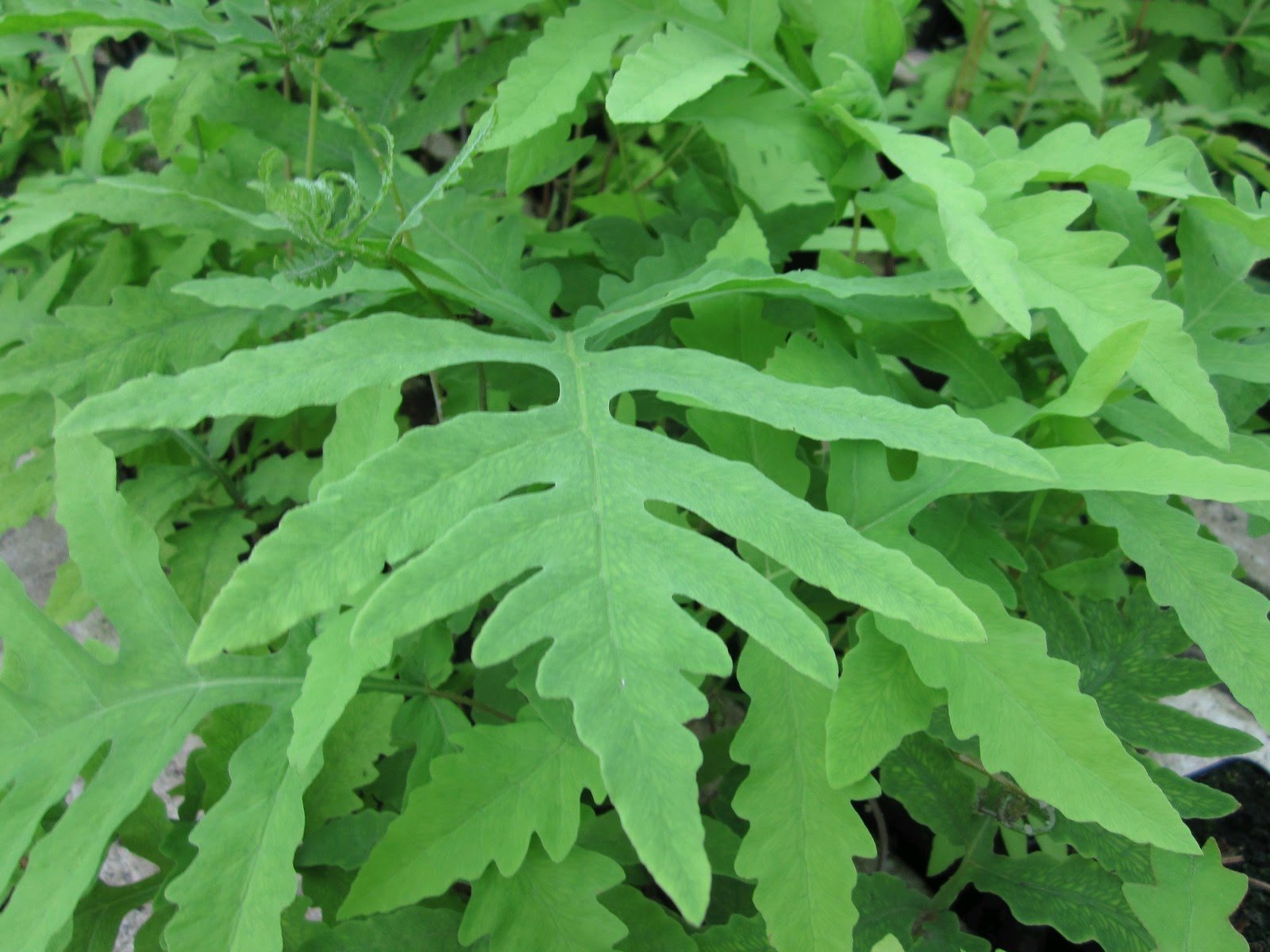
Sensitive fern 
Long beech fern 
Interrupted fern 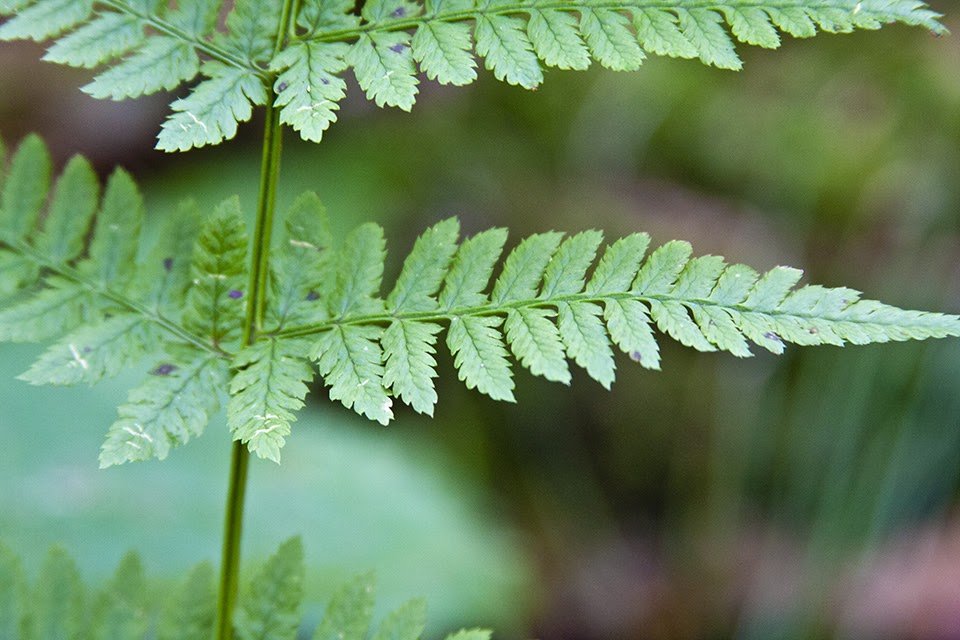
Spinulose wood fern 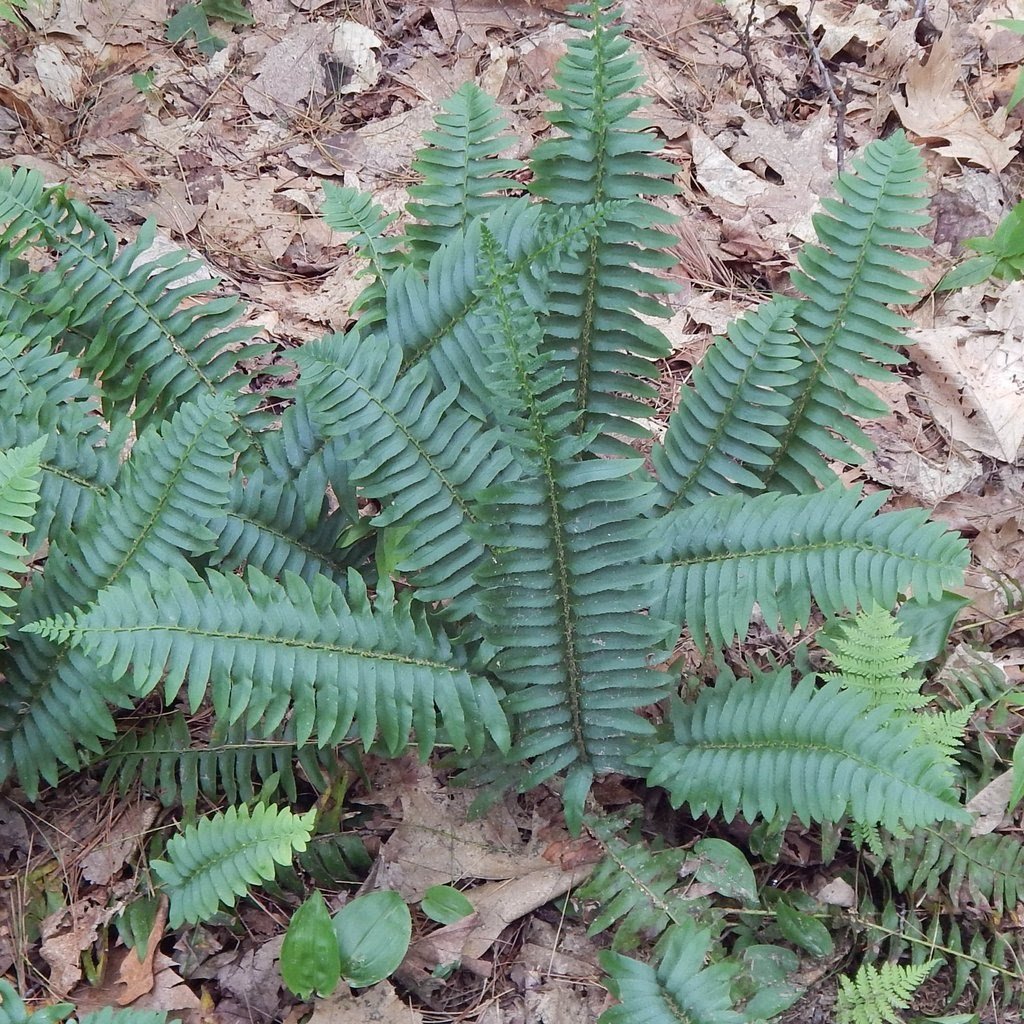
Christmas fern 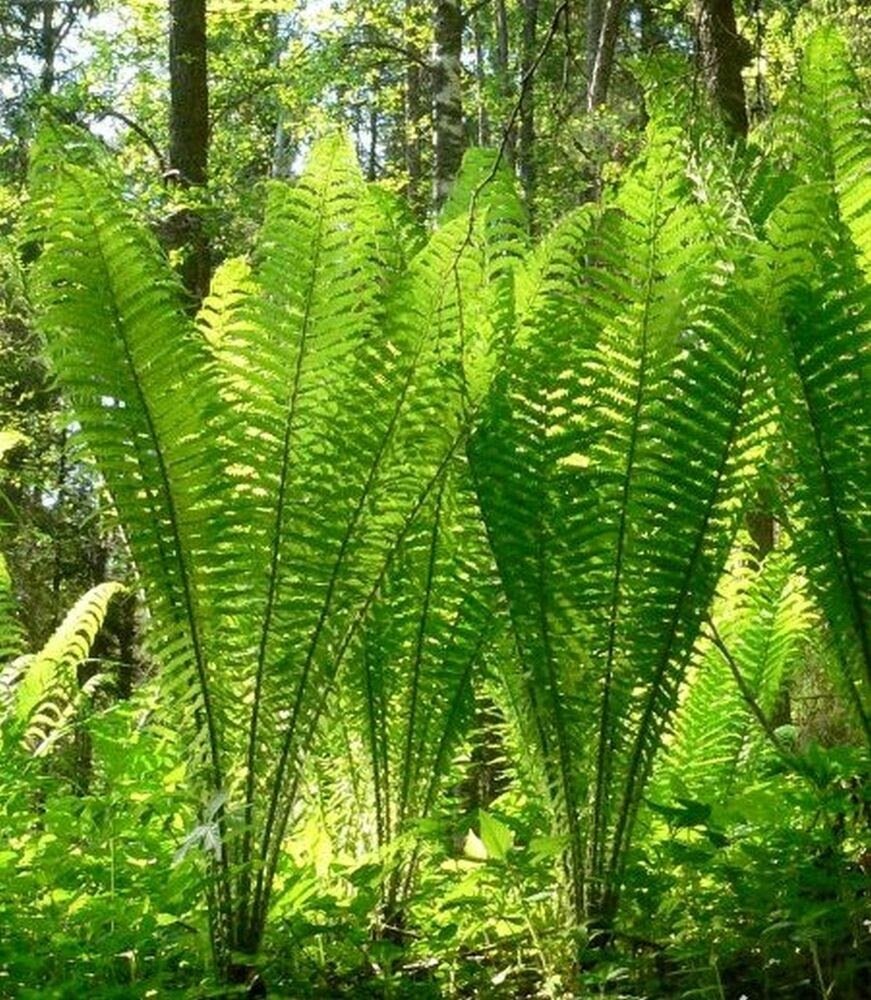
Ostrich ferns 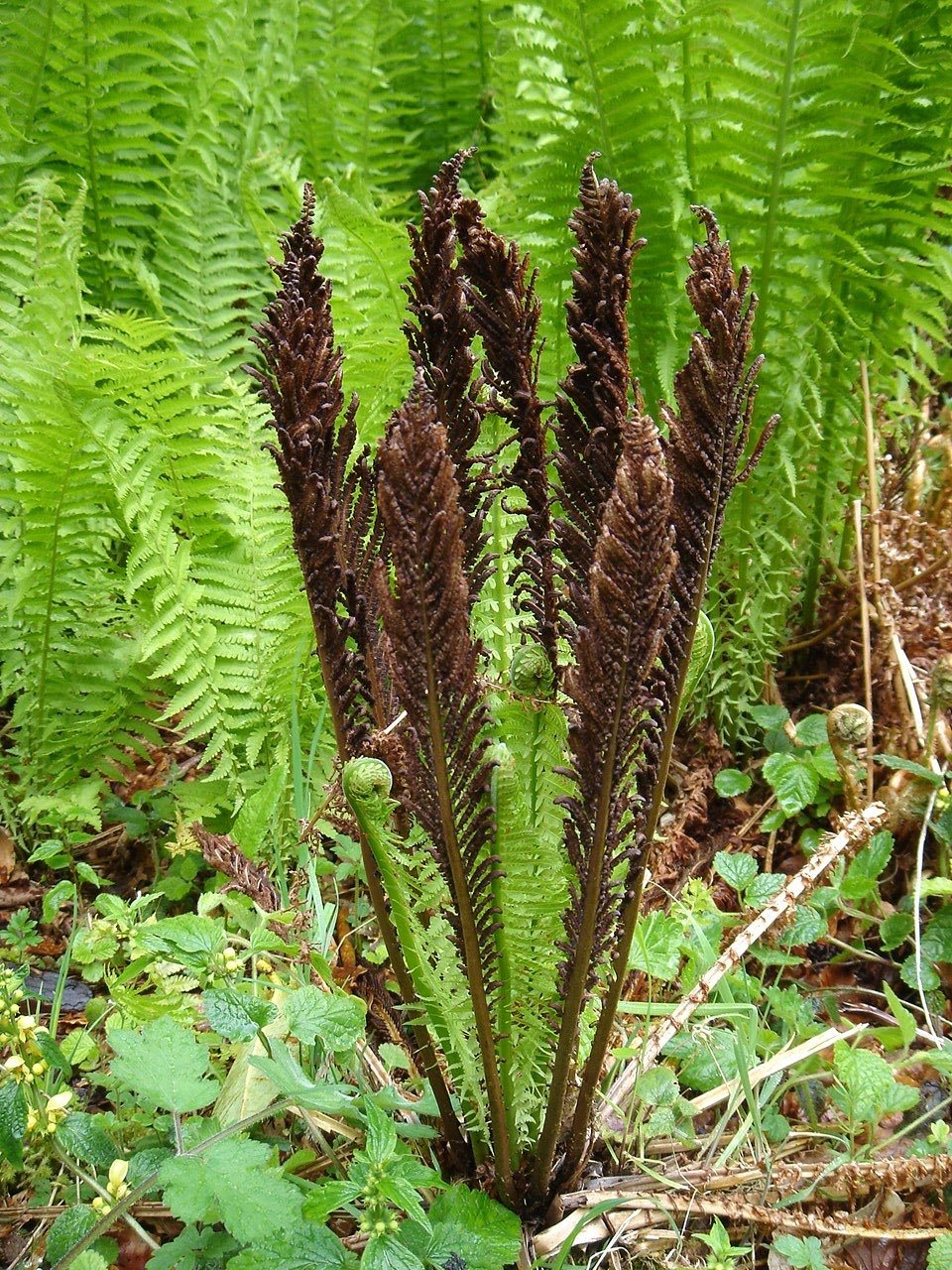
Ostrich ferns and spore pods

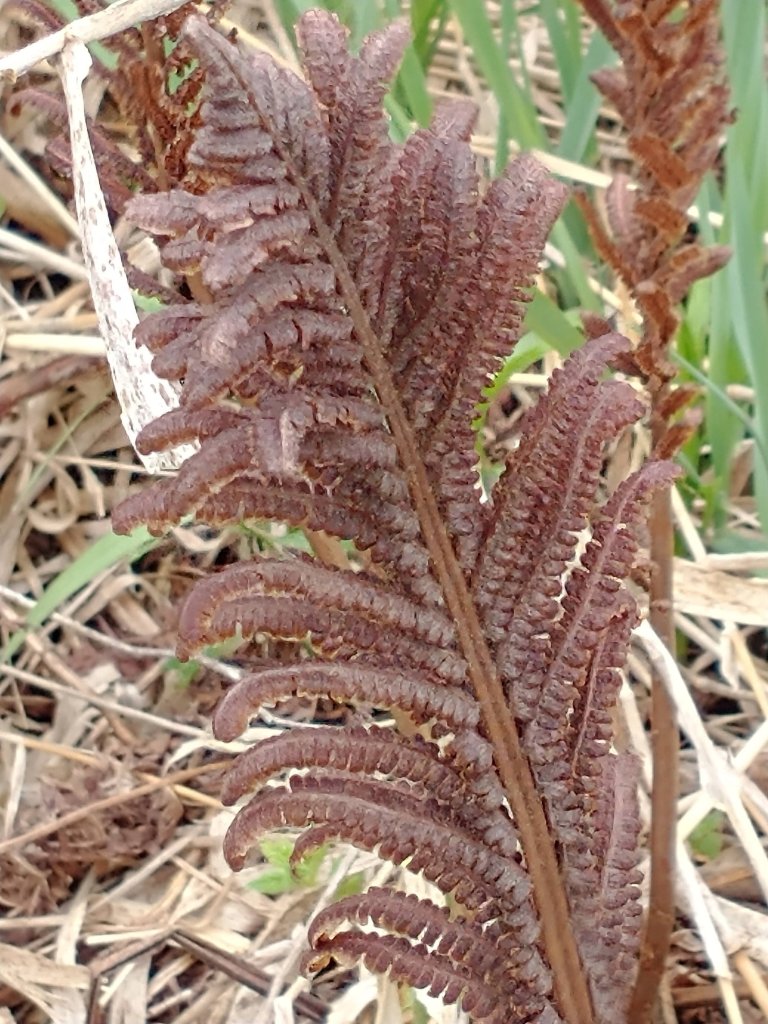
So the next time you get the chance to ride some roads, bring along your Gazeteer and mark locations that you can return to next spring. You won’t find those beautiful ferns, but you will most likely spot the dried spore pods that are left behind. So if you find yourself still not finding fiddleheads by the ferns, then try concentrating on the spore pods. Ostrich fern spore pods are very distinct, and you’ll know for sure you’ve found your spot. Not only are they neat to discover, but they make great decorations in a simple vase.


The other important thing to remember is timing. Since most of our fiddleheads are found north of where we live, we find that our mountain fiddleheads can be as much if not more than two weeks later before they’re ready to harvest, so don’t get discouraged if they’re not readily found the first time you check. Patience and persistence will get you the prize!
One other thing to consider if you are foraging on paper company land is to look for herbicide use nearby. Large clear-cuts will get sprayed yearly, so I like to make sure there aren’t any signs of herbicide use before I pick.
Happy Foraging!





 There’s lots of talk these days about cell phone usage, texting while driving and distracted driving. Distracted driving does involve many scenarios, and I recently experienced a new sort of distracted driving even I had never considered. I’ve always prided myself in the fact that I never text and drive, only answer calls if I think I can, never make calls while driving, and never, ever, put on makeup while driving…well okay, I hardly wear makeup and I put it on at home.


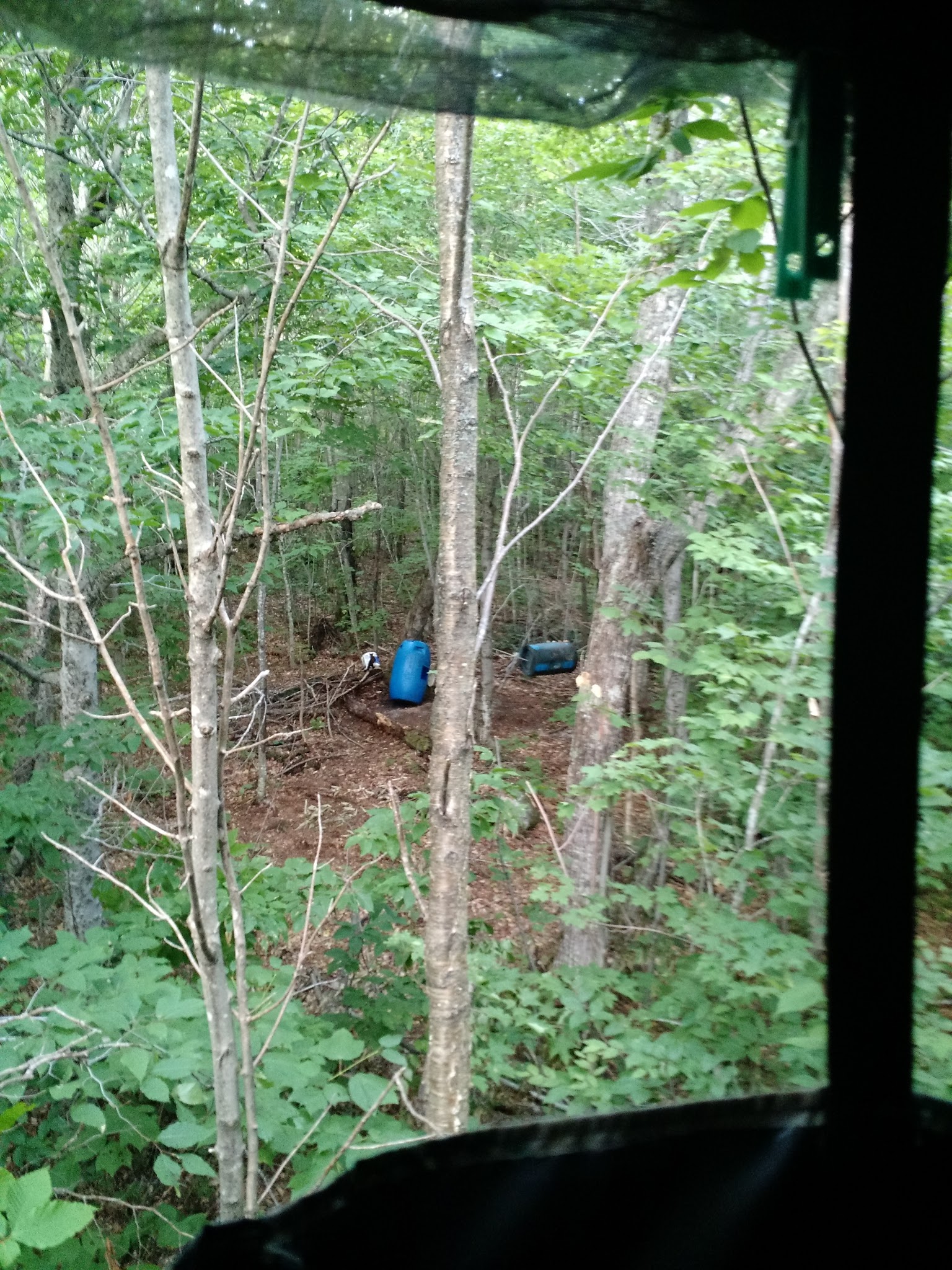


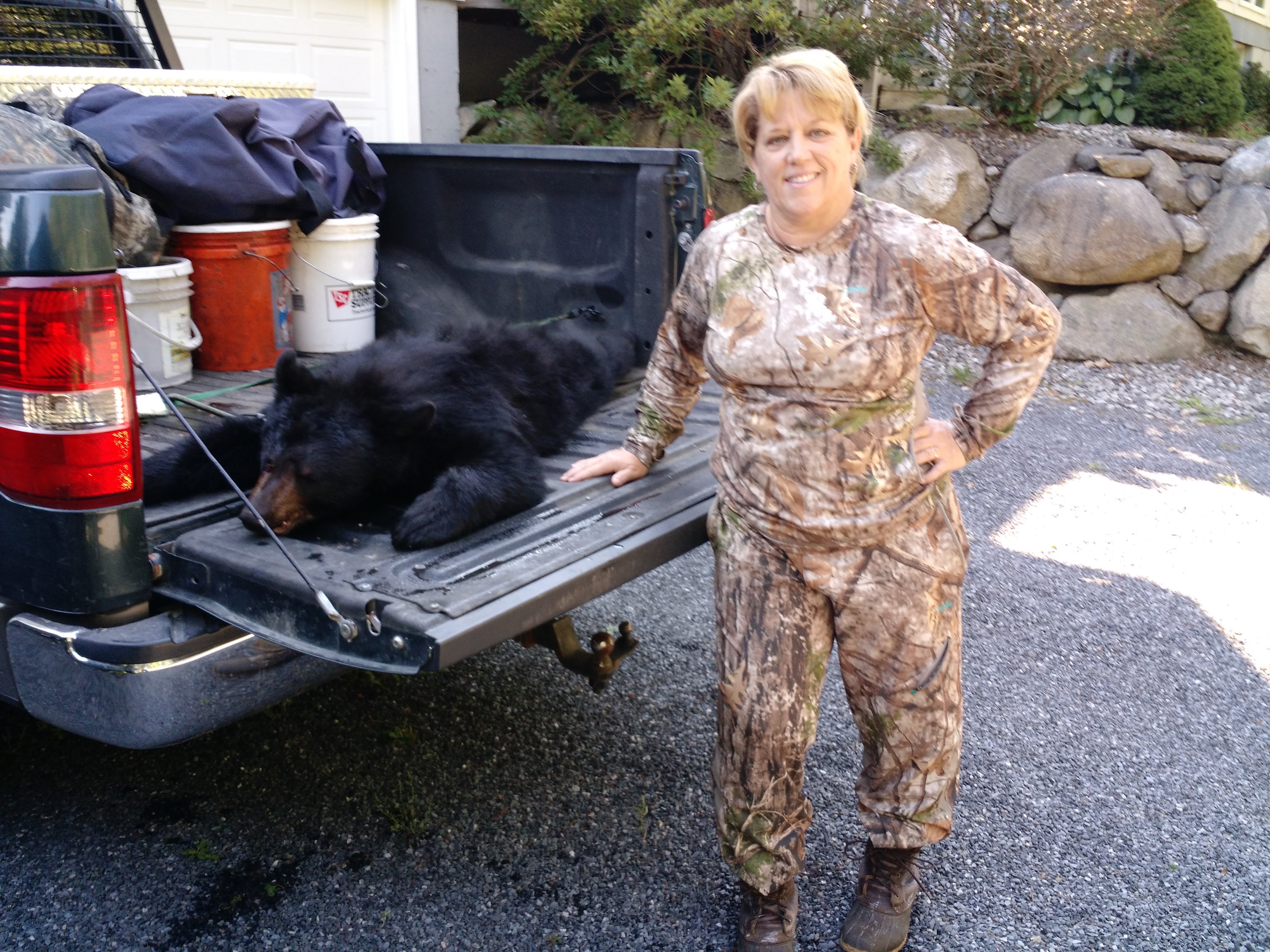
 Day two was also cool, but with little to no wind. Bears would be moving. Instead of going at 2pm, we were there at 4:30. “Still plenty of time to get in our stand before a bear shows.” John and I decided to “scent up” the bait sites since it was nice and quiet. I took my time walking into the site, not only to walk with the breeze, but also to not become a sweat-fest after all the time I took to de-scent myself. The wind was blowing up the hill so in my mind, when you hunt the wind, you cover your scent downwind. To help me come in undetected, I decided to squirt a little


 However, I cannot trap for a bear if there is a potential chance that I will trap this sow. The last thing I want to trap is a sow with cubs nearby. I’d have to release her, and that was not included in my training! Thank goodness for cameras and multiple shots. When she first came to the bait, her cubs did not appear until about 15 minutes later.


 When we arrived at my bait site, we found all the bait gone from the blue barrel, most of the grease gone, but some pink nougat still left. The bears had been there every day taking turns throughout the day and night getting some much needed food. We still have one skinny one, but he just appears young, not tick infested as some other hunters have suggested. In the middle of the pile of bait left outside the barrel was the most beautiful 6 inch-ish wide bear track I’d ever seen. This was from a BIG bear. My heart raced as I wondered if it was Scrapper. I wouldn’t be able to tell if it was since I had crushed my digital camera the week before, so I no longer have a way to check cards until they go into the computer. Dang!


 When we arrived, the bait site was trashed. The barrel had been ripped from the tree and rolled a few feet away with bait dumped. All the trees were clawed up and the caramel was eaten. They didn’t spend a lot of time on the nougat, but did like the grease.


 Fishing on the Maine coast for striped bass, which most fisherman call Striper, is one of my favorite types of fishing. We have tried fishing for striped bass with eels, worms, poppers, mackerel and crabs. Nothing has worked as well as quahog clams. The bigger the clam the better. The weight of the clam eliminates the need for a sinker.
 Quahog clams are big clams that we pick from the sand at low tide. This is perfect since we fish right when the tide turns and comes in. Well, we don’t actually pick them unless we buy them at the grocery store, but we prefer to get our own.
  We go out waist deep into the cold ocean water. We use our feet to feel the sandy bottom underwater while trying to stand in one place with the waves coming in. Standing with both feet together, John does the jig…a twisting motion to work his feet into the sand and feel a clam under his feet. I can’t use both feet together because the movement hurts my knees, so I use only one foot and move it back and forth moving the sand and digging a hole with my foot until I feel a clam. We then use our toes to get underneath the clam and free it from the sand. Then comes the torture of getting the upper body wet. I do the big dip underwater to retrieve my clam. Into the suit it goes, and then I move onto another spot. We stock up on clams to use for future fishing as well as for the moment.







 My Mainely Girl Adventures