
Here it is July and it won’t be long before we’ll be bear hunting, and trapping, then it won’t be long before we’re bowhunting for deer and hunting for some grouse.
Bird hunting, which is what I call grouse hunting, is one of those things that never seems to be consistent from year to year. There have been many years that we literally rode for hours to see two or three birds only to have them fly off or have me miss under pressure.
Some say get out and walk….well we don’t get out and walk the woods just because there are so many other people riding around and they’re never particularly happy if you’re walking the road. There’s a compelling reason to not be a jerk and go around you, but then it prevents others from traveling and hunting the road.
Thinking back of over the season, I thought, there has to be a better way to find birds. After all, we scout for everything else we hunt, so why not grouse?
Since I don’t own a bird dog, the only thing I do have is a lot of time in the woods, riding roads to and from great fishing spots, and when searching for mushrooms. In doing so, I’ve also found myself finding lots of sign from grouse, and that’s when my mind began to really focus on scouting for them now so that when the season arrives, we’ll have a better idea where to begin.
Spotting grouse begins in the spring, just when the poplar trees and birch trees begin to bud. At the end of the day, just before dusk, we’re usually riding home, and all we have to do is look up to the top of the trees. We’ll sometimes spot as many as five birds in one tree. We’ll watch them eat the buds and just enjoy seeing that there’s a good healthy population of birds.

There are 4 birds in the trees 
How many birds do you see? 
This bird is reaching upside down to get to the buds. 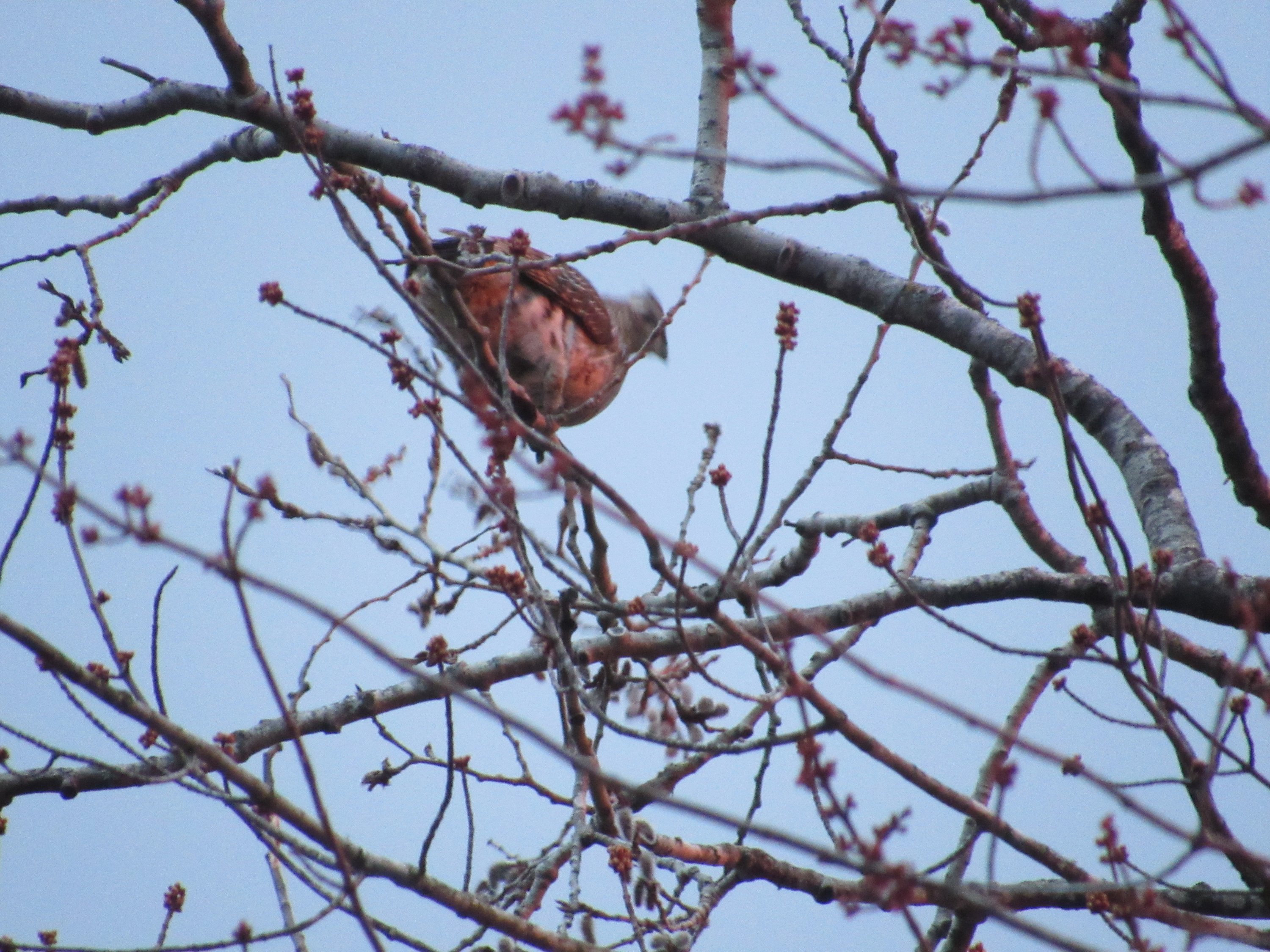
The grouse will go to the end of the branches to reach the buds 
Sun setting on the horizon cast a red hue into the trees 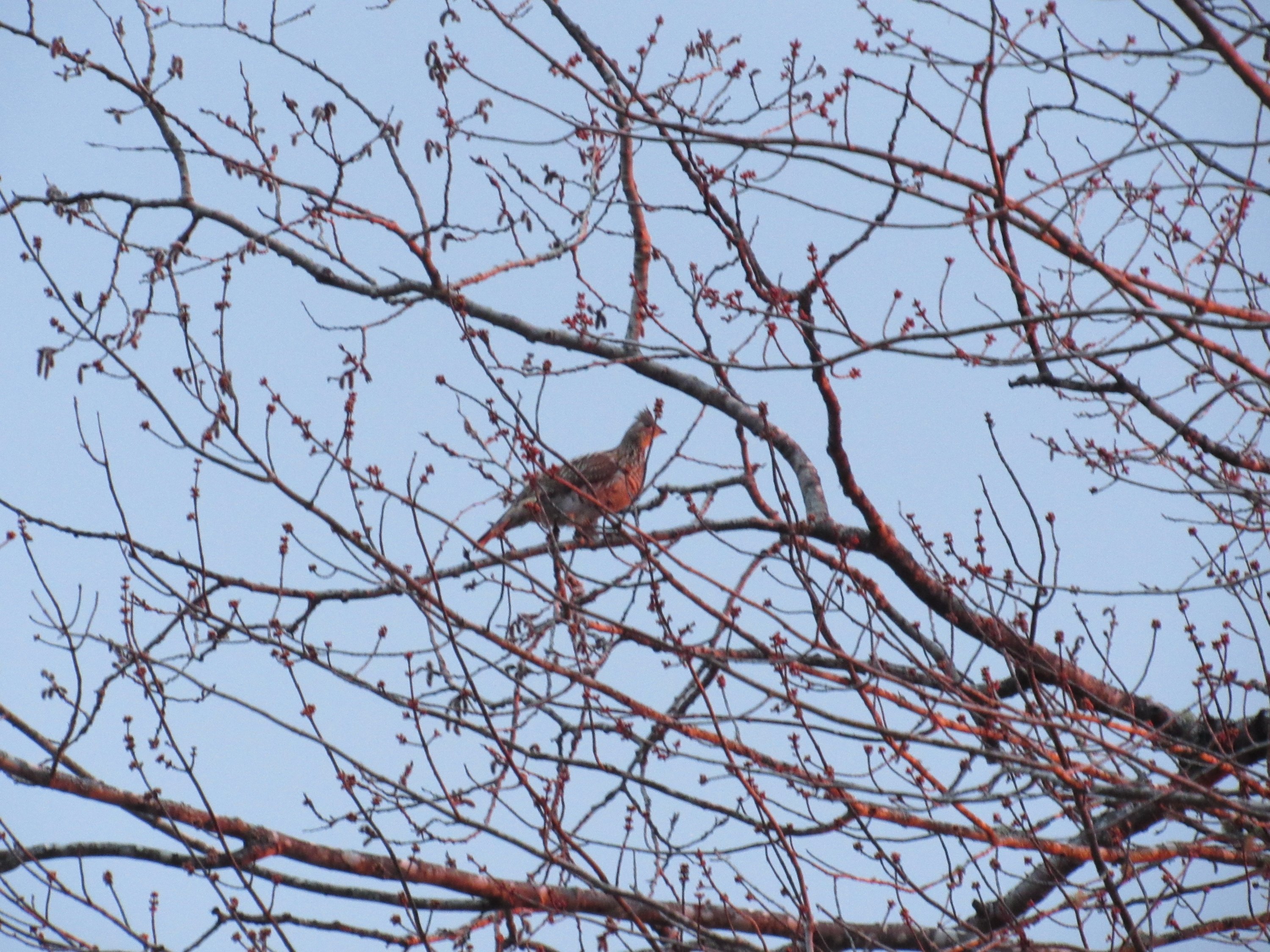
This partridge/grouse is enjoying a meal of tree buds
The last two years have been pretty darned dry, if not drought like, according the weather people, and with dry weather comes the successful brooding and rearing of grouse and turkey chicks.
Even before chick season, I start to keep track of the dusting spots I see on each road we travel. Dusting spots are great indicators of the number of grouse in that area. What’s even more fun is is finding several dusting spots in one area. And not to my surprise, we’ve driven on roads that we’ve hunted and found literally no dusting spots.

Dusting spots are used for birds to rid bugs, mites, any type of critter they don’t like from their wings and body. I usually spot them on berms on each side of the road. The dry dirt is bowled out from their digging and dusting. The size of the dusting spot for a grouse is usually the size of a small cereal bowl. Upon inspection, you can sometimes even see their tracks in the dirt. Turkey dusting spots are much bigger and although they do dust, I don’t find nearly as many as I do for grouse.


This spot is evident, but the rain washed away any signs of recent use. 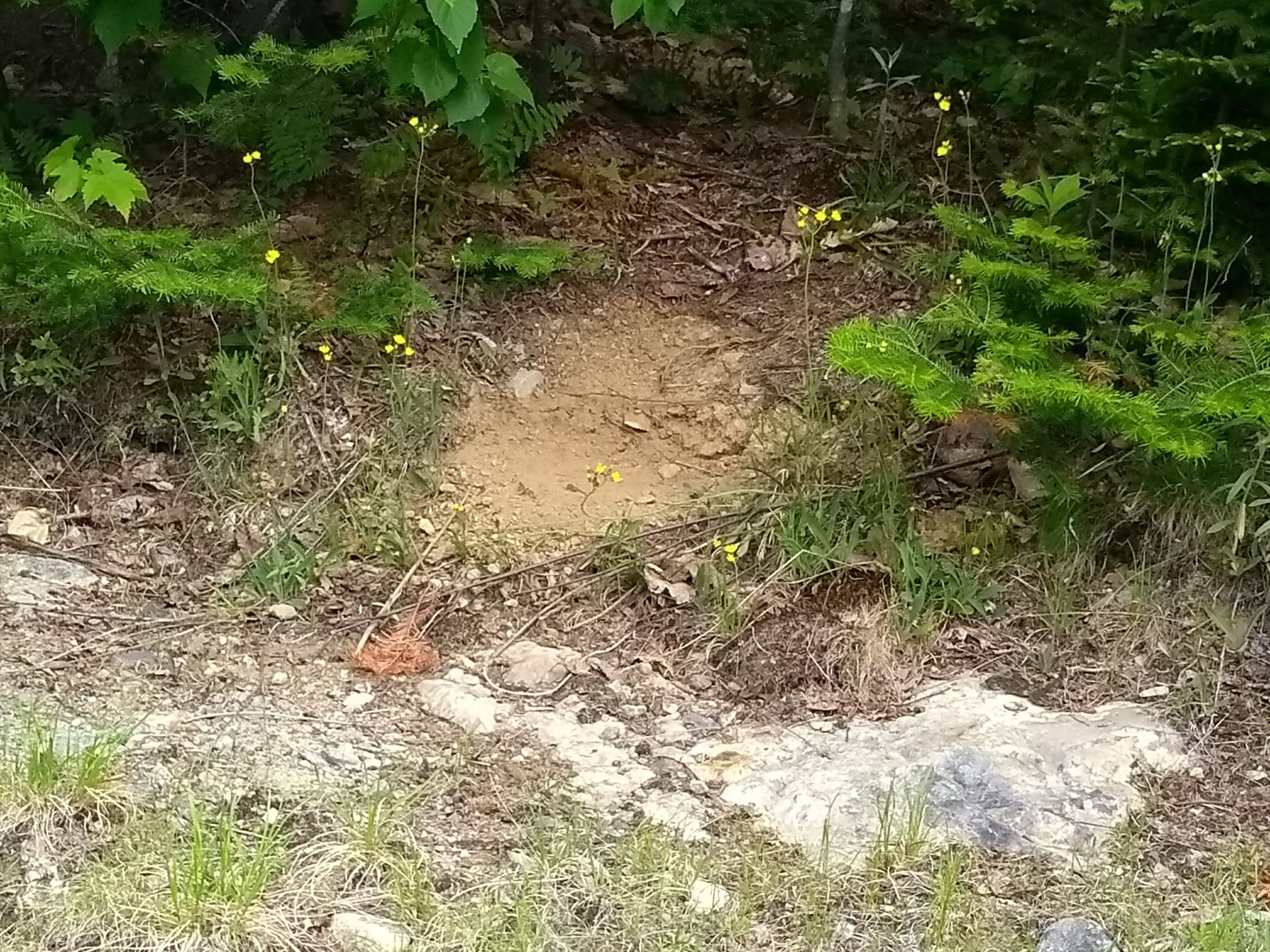

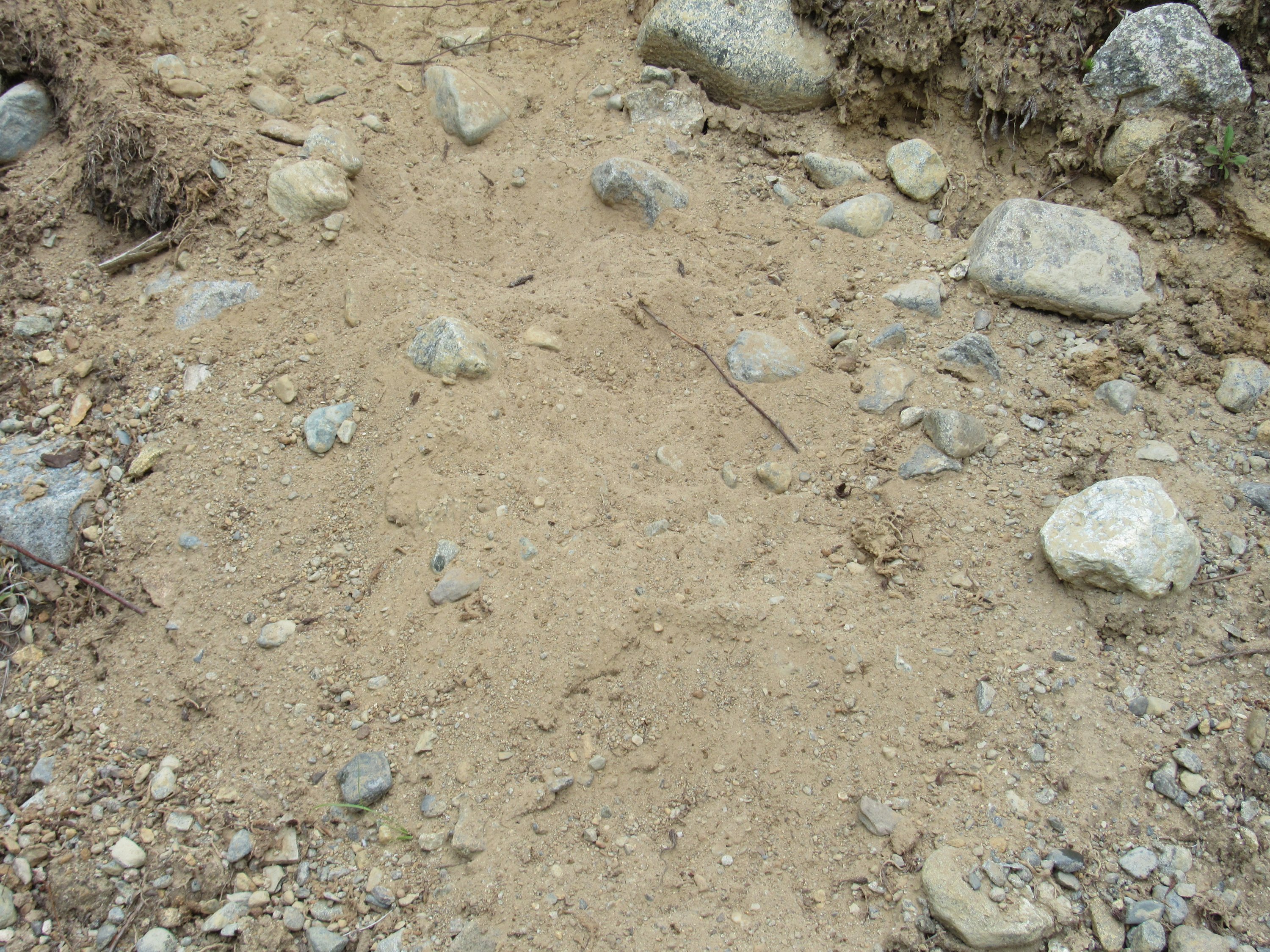
Look up near the top…four rocks with a perfect bowl in the middle.
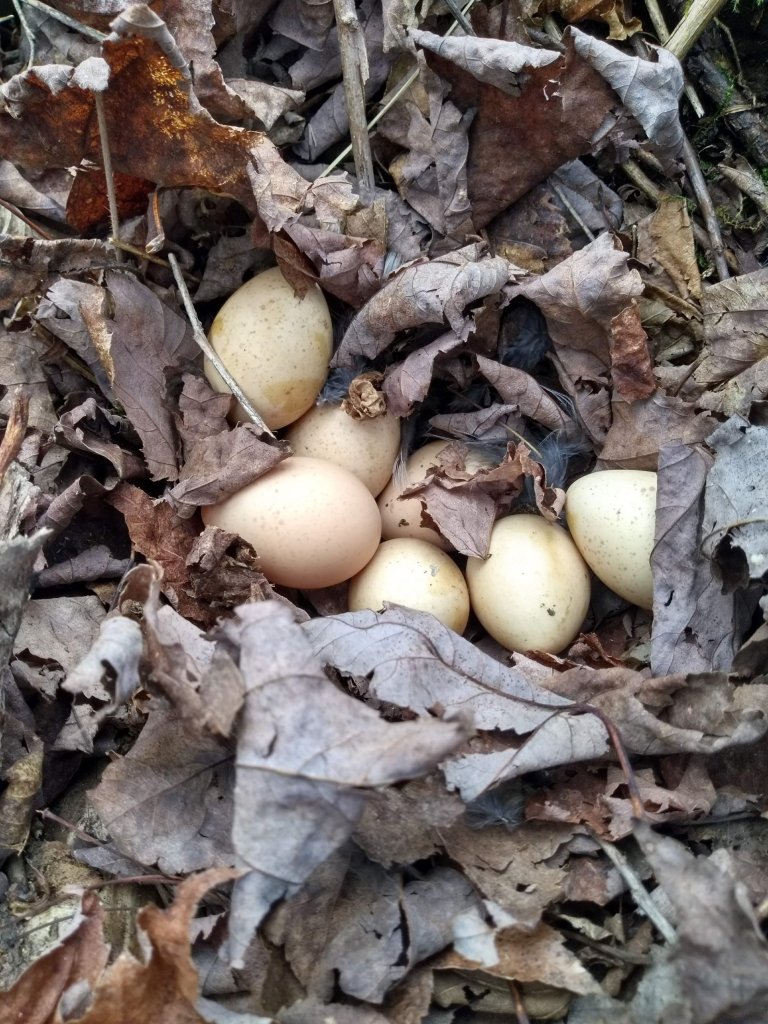
Sometimes we’re lucky and we’ll stumble upon a nest. This nest and its eggs ended in a horrible robbery from predator.
Then comes chick season. This is the fun time when you start seeing grouse in the road, walking slowly, and then either on the opposite side of the road or right behind the grouse as it darts for cover, there will be a clutch of chicks. In one day, we saw 9 clutches.

At one point, I saw chicks, but no hen. I got out of the truck and headed for the edge of the of grass hoping I could get a photo of at least one of the many chicks we had seen. Out of the corner of my eye, I caught a flash of brown before I realized it was coming for me. As I reacted with a loud yell and gasp, I was able to compose myself enough to take some photos. There was one very pissed off momma.

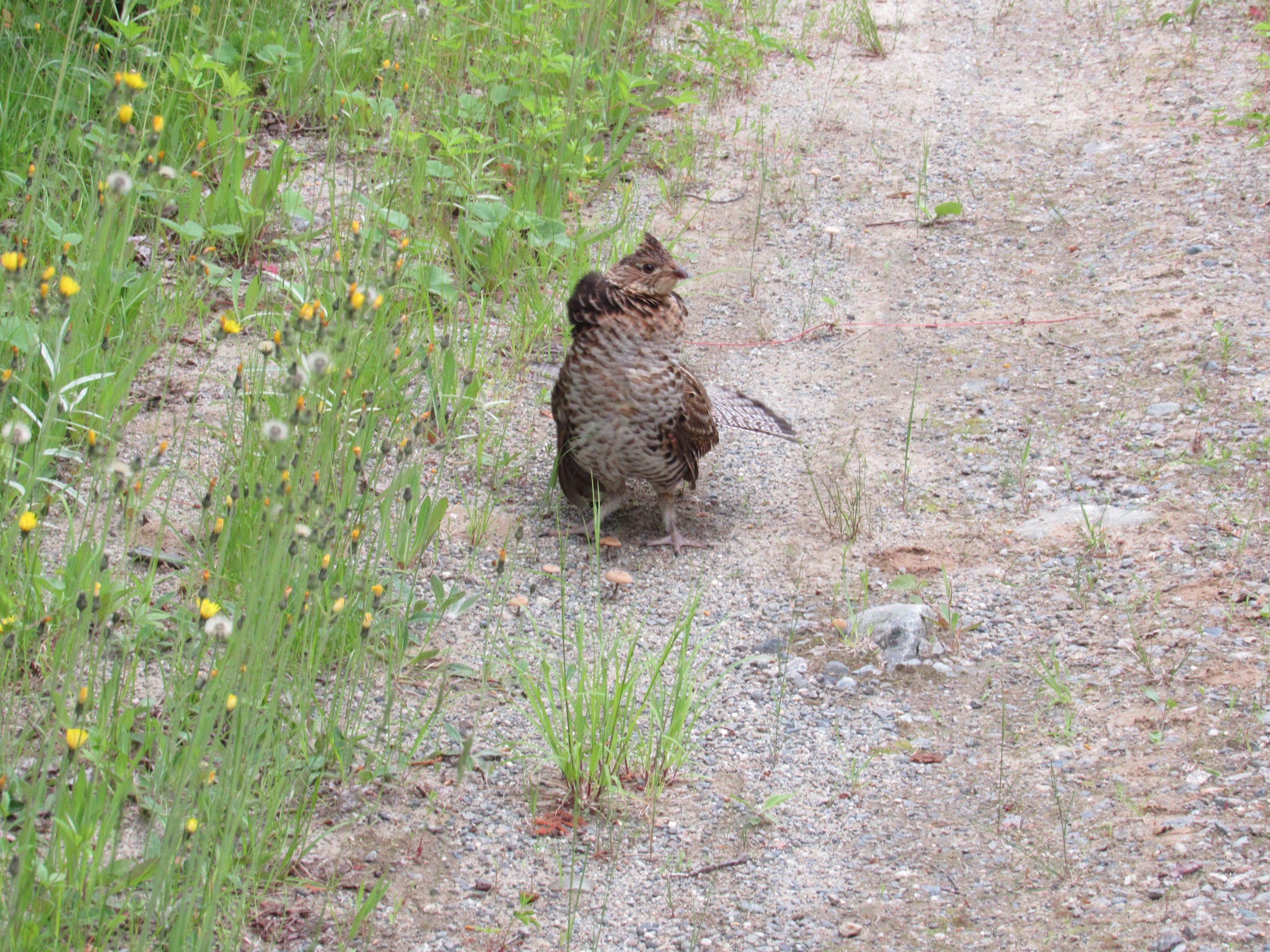
So I hope this will give you a little inspiration when you’re out in the woods to look around and maybe just maybe see the signs of grouse. It definitely has helped our success rates in the fall. Happy hunting!


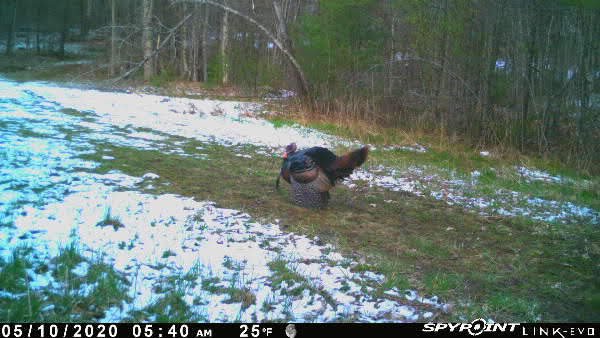






 John did a call. The turkey answered. We strategically kept trees between us and the bird, and made our way to the big hairy pine standing on the edge of the field. There was about 50 yards to the gully where a line of trees grew and separated the fields. The turkey was on one side, and us on the other. I was afraid the turkey wouldn’t cross the line of trees as they don’t usually like to do that. But luck was in our favor. That turkey was on a dead run after a couple more calls. I readied myself under the bottom tree branch, and waited until the turkey was in range. It crossed the tree line. It strutted. I could hear its feathers ruffling. It dropped his feather and let out its last gobble. I fired and dropped him on the spot. Textbook hunt right there, and I bagged a big fully-mature turkey. We went and tagged the turkey, but the store couldn’t weigh it. I think he was a good 20 pounds but we could only get 19.1 pounds on the deer scale.


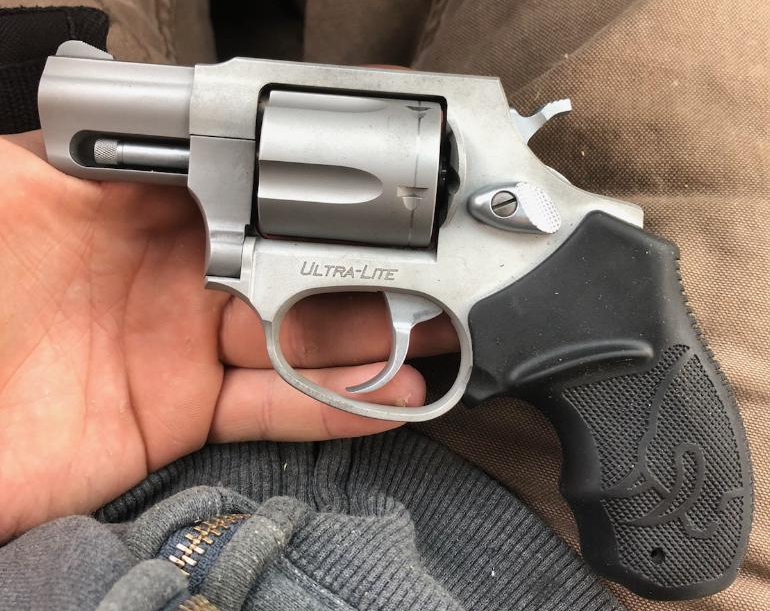 I’ve had training and I have a concealed carry permit so when I headed into the woods, I brought along my .44 Taurus for the remainder of the season. It’s like a cannon in my hand, but I can shoot it. I’ve since moved to a different handgun, a Taurus P38 ultralight that’s easier to shoot, and also lighter to carry.
 Being a woman hunter in the Maine outdoors is one of the most enjoyable and empowering things I’ve done in my life, and if carrying a handgun while bow hunting is going to make me feel safer while I do the things I love, then I’ll continue to carry. I’ve even taken it along on my adventures with girlfriends, and it’s been well received. Whether I’m bird hunting, fly fishing or bow hunting, I plan to keep making memories and have my handgun with me.


 Tinkerbell lived inside the house after she had her pups. When we decided to make Fly, Tyler’s dog and knew that he would sleep inside, Tink remained too. Since she was just paper trained as a puppy, and never lived inside, she never let us know when she had go. It was challenging; we basically trained Tink and Fly at the same time! Eventually, Tink and Fly could go in and out to do their business without us fearing they’d take off. We even built a large wired kennel for them to spend their days in away from the rain, snow and sun and without a leash. They’re attached house is double insulated and heated in case it gets cold.

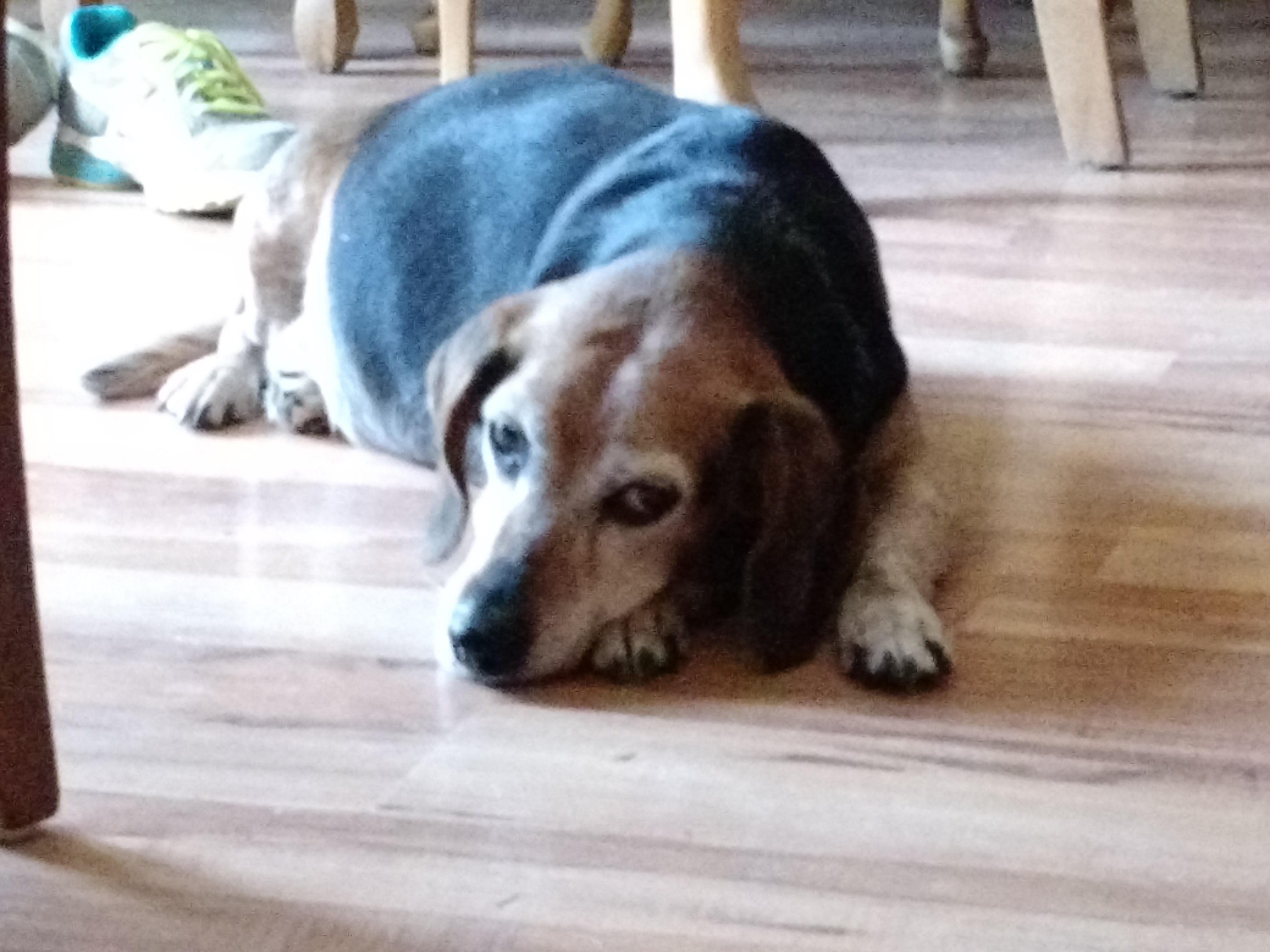
 The day the veterinarian came to the house to lay her to sleep weighed heavily on me. I doubted my decision. I didn’t like having to make a decision like this. I sat on the floor and petted her. I kept Fly nearby. They were each others companion. I took pictures of her. Looking at the pictures of her just a year ago and now, I could see the change. She had grayed. She was emaciated and I could now see all of her back bone. It was sad to see. It makes me feel better that she didn’t suffer. She never acted “ill”, but more exhausted from carrying her load and trying to be comfortable. The grandkids adored her, and even in her state, she always loved their attention.




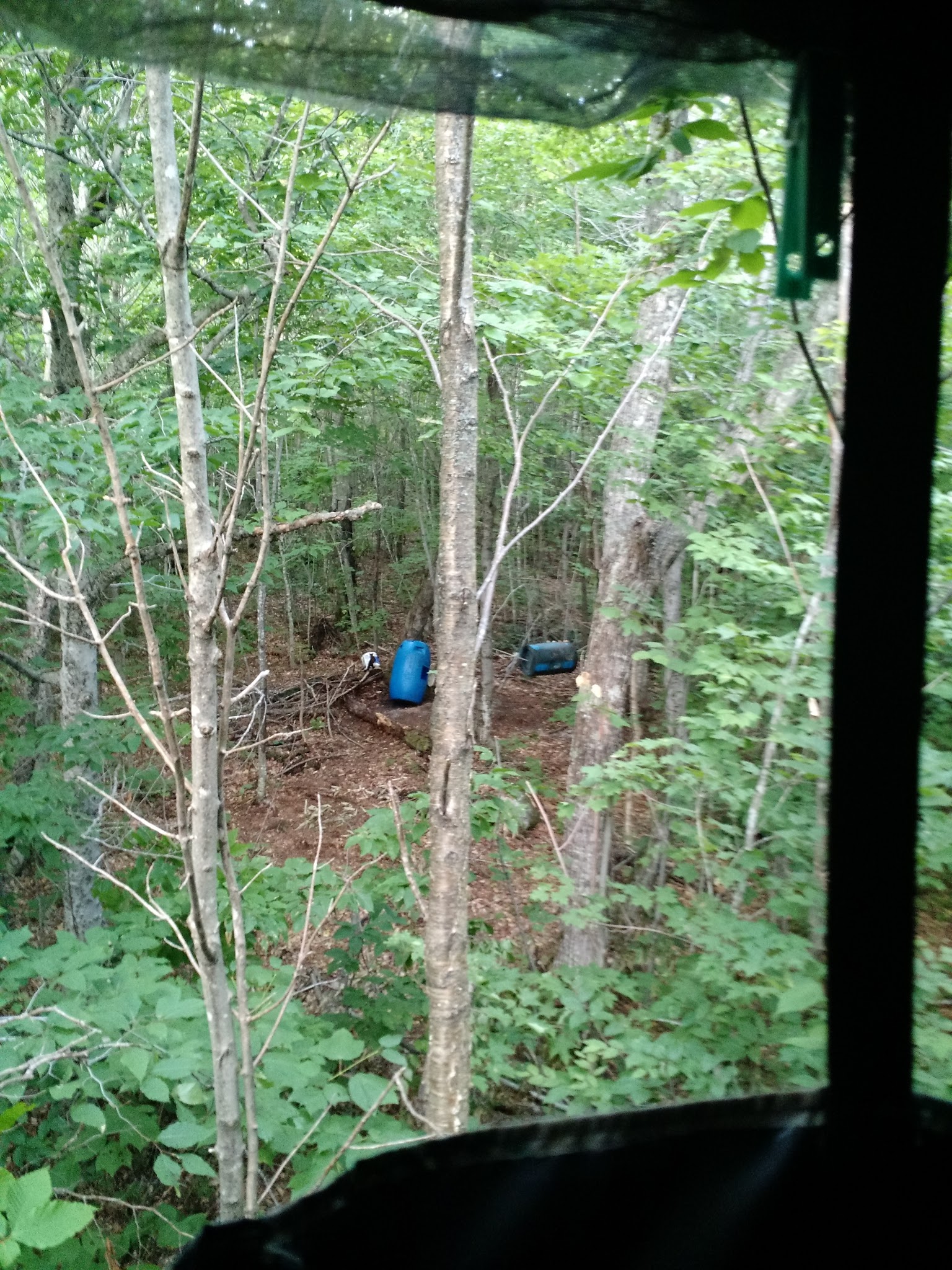
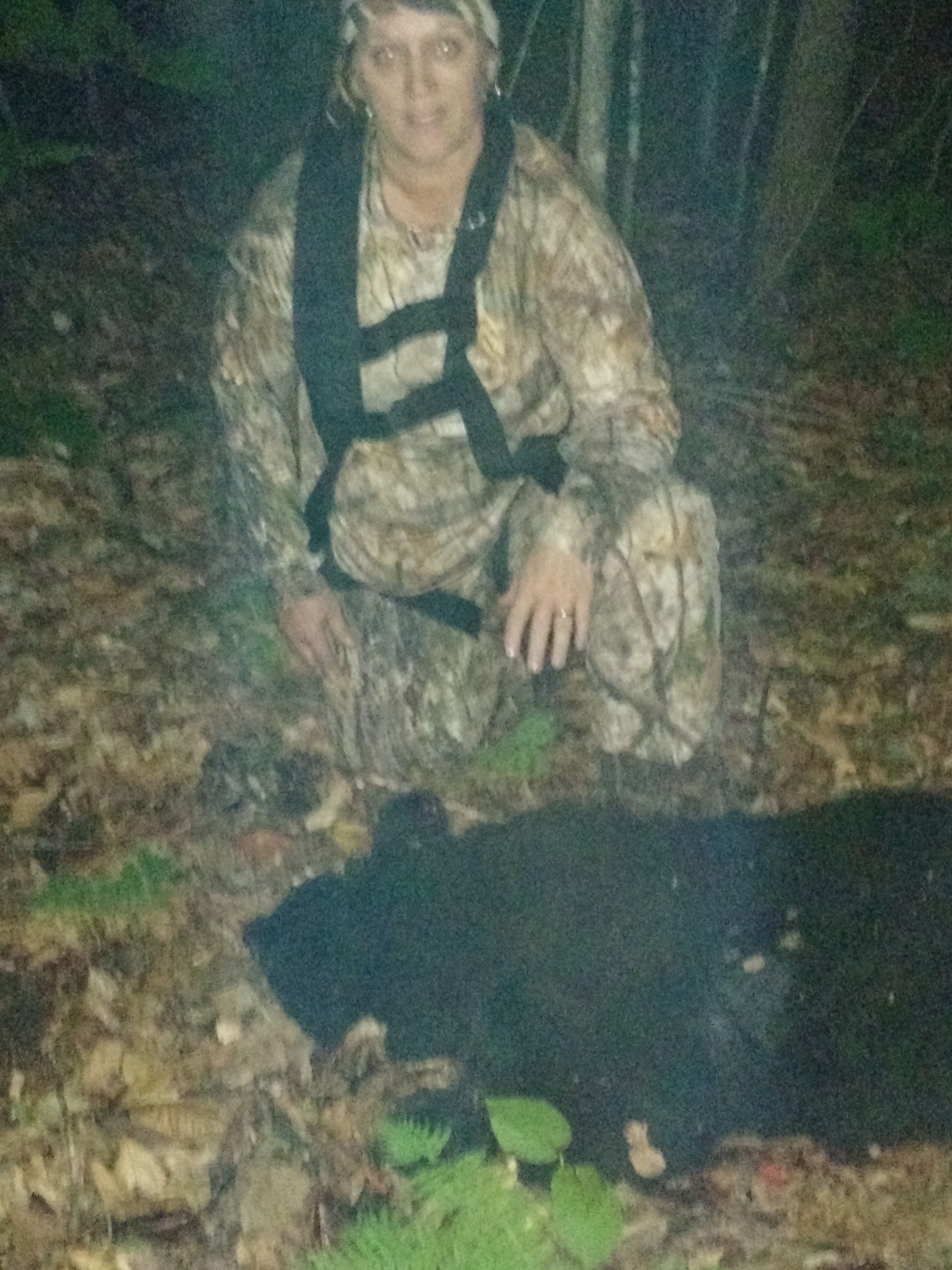


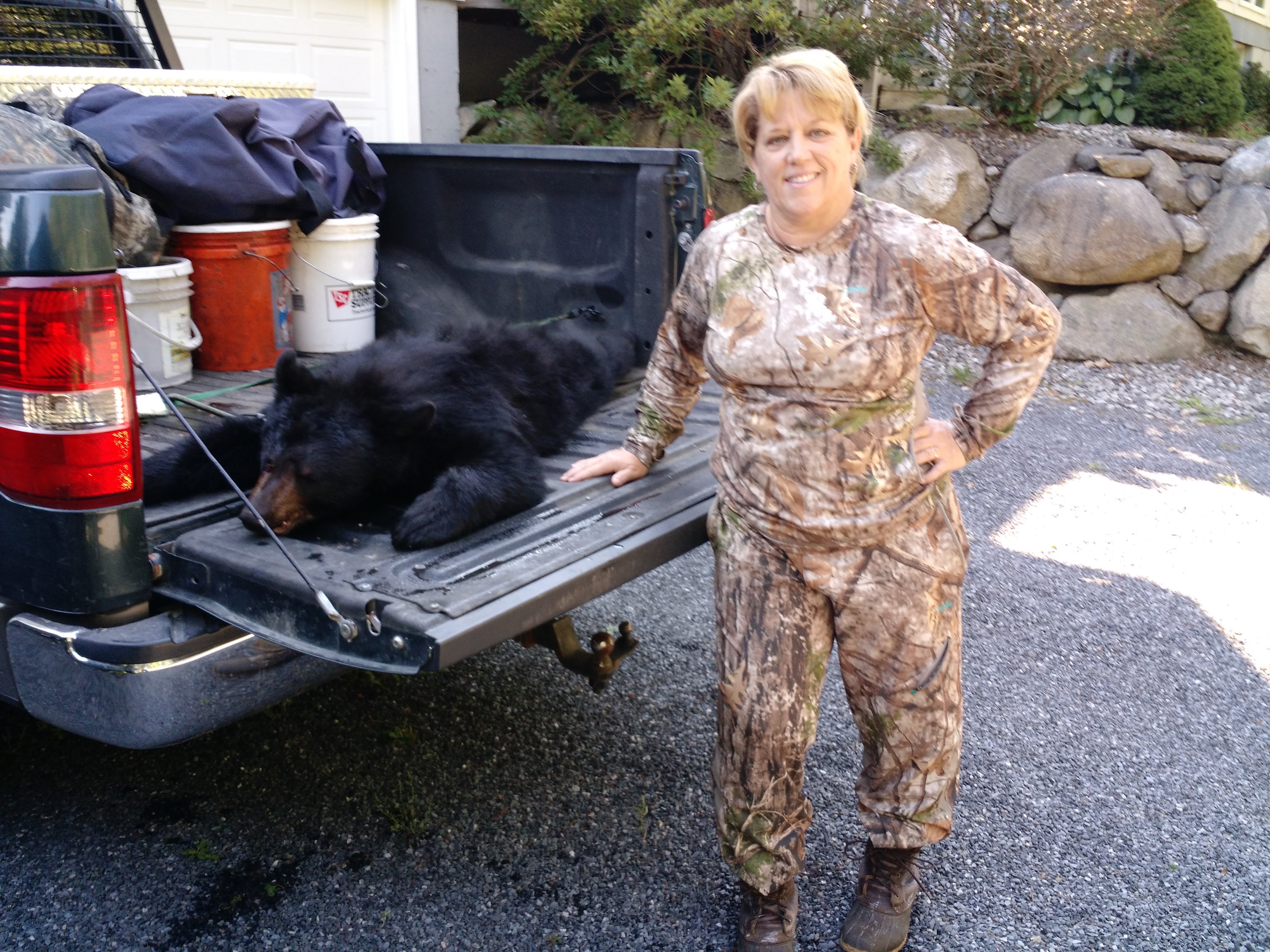
 Day two was also cool, but with little to no wind. Bears would be moving. Instead of going at 2pm, we were there at 4:30. “Still plenty of time to get in our stand before a bear shows.” John and I decided to “scent up” the bait sites since it was nice and quiet. I took my time walking into the site, not only to walk with the breeze, but also to not become a sweat-fest after all the time I took to de-scent myself. The wind was blowing up the hill so in my mind, when you hunt the wind, you cover your scent downwind. To help me come in undetected, I decided to squirt a little


 However, I cannot trap for a bear if there is a potential chance that I will trap this sow. The last thing I want to trap is a sow with cubs nearby. I’d have to release her, and that was not included in my training! Thank goodness for cameras and multiple shots. When she first came to the bait, her cubs did not appear until about 15 minutes later.


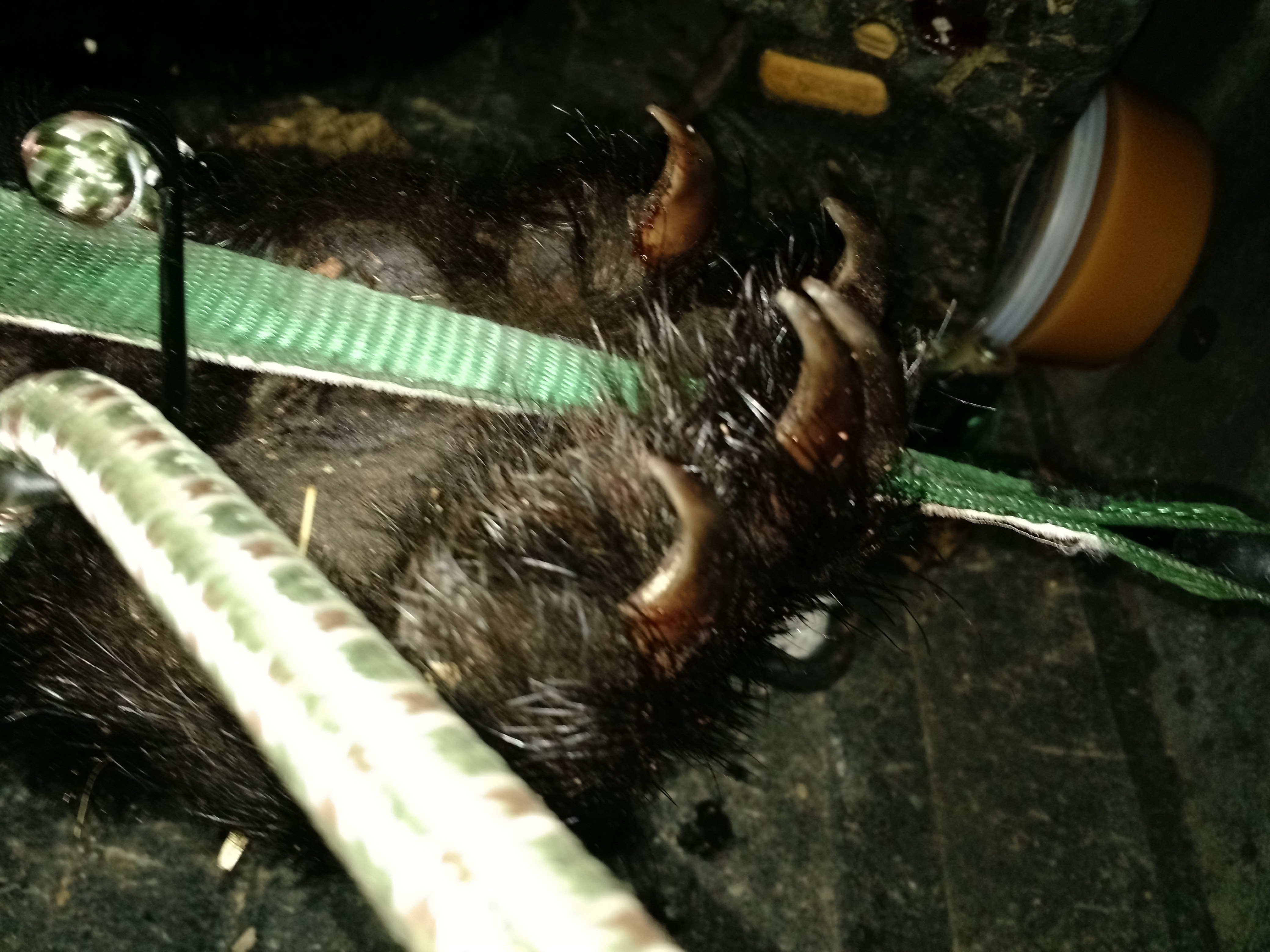
 When we arrived at my bait site, we found all the bait gone from the blue barrel, most of the grease gone, but some pink nougat still left. The bears had been there every day taking turns throughout the day and night getting some much needed food. We still have one skinny one, but he just appears young, not tick infested as some other hunters have suggested. In the middle of the pile of bait left outside the barrel was the most beautiful 6 inch-ish wide bear track I’d ever seen. This was from a BIG bear. My heart raced as I wondered if it was Scrapper. I wouldn’t be able to tell if it was since I had crushed my digital camera the week before, so I no longer have a way to check cards until they go into the computer. Dang!


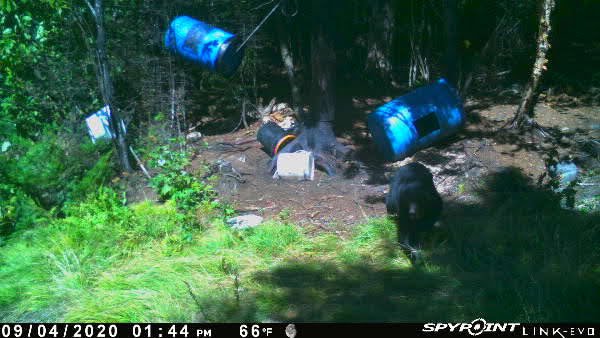
 When we arrived, the bait site was trashed. The barrel had been ripped from the tree and rolled a few feet away with bait dumped. All the trees were clawed up and the caramel was eaten. They didn’t spend a lot of time on the nougat, but did like the grease.






 My Mainely Girl Adventures